
Rhinoplasty
Rhinoplasty Consultation: Questions to Ask Before You Decide
A rhinoplasty consultation checklist covering candidacy, risks, consent, recovery, travel follow-up, and the itemized quote.
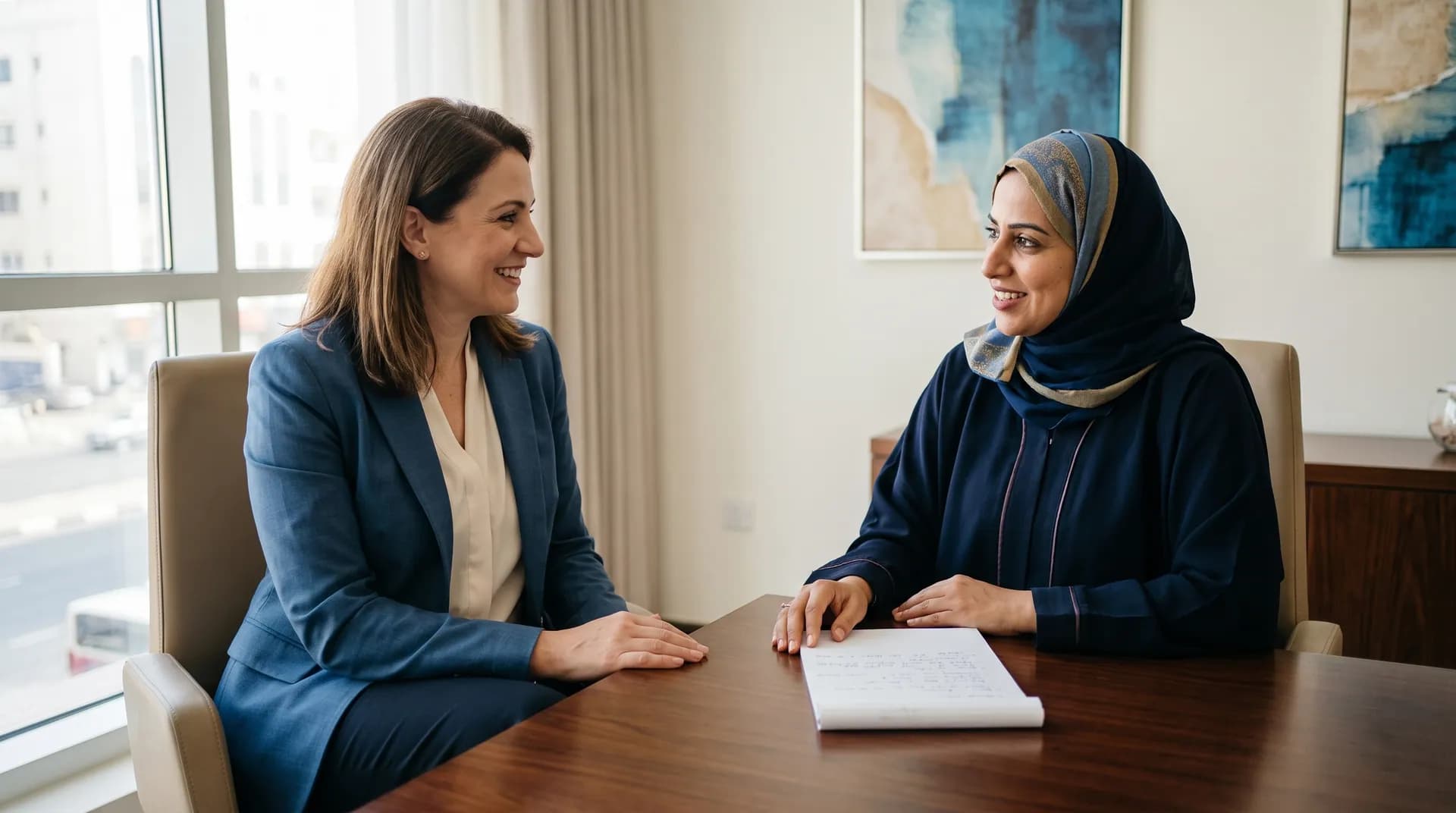
A rhinoplasty consultation is a structured conversation, not a sales appointment. Public education from the American Society of Plastic Surgeons encourages patients to ask about goals, candidacy, risks, the surgical plan, recovery, and cost structure before deciding. Bring your own written list. Leave with dated answers, not only reassuring tone.
Use the consultation to test whether the team can explain uncertainty without pressure. If every hard question is redirected to a deposit deadline, you learned something important about process quality before any clinical conclusion was reached.
Prepare by separating appearance goals from breathing concerns, listing medicines and prior nasal history, and noting what remote review has already concluded. For candidacy boundaries, see Am I a candidate for rhinoplasty?. For surgeon and hospital verification, see How to choose a rhinoplasty surgeon and hospital. For the Oman planning sequence, see How to plan rhinoplasty travel from Oman. For coordination, use the Rhinoplasty coordination page.
Arrive with a companion if that helps you listen, but decide in advance who may speak for you and who only takes notes. Ask for a quiet moment at the end of the visit to repeat back the plan in your own words. Misheard scope is expensive later.
Questions about candidacy, scope, alternatives, and functional impact
Start with what is being assessed and what remains open. A consultation that skips alternatives or treats every concern as an automatic surgical target is incomplete. Public candidate and consultation materials emphasize history, examination, and honest goal-setting before anyone presents a fixed operative menu.
- Which of my goals are appearance goals, which are breathing or function goals, and which still need assessment?
- What history, examination, and tests do you need before proposing scope?
- What alternatives exist, including waiting, further investigation, non-surgical options if relevant, or declining surgery?
- If a technique is proposed, why that approach for these goals, and what trade-offs does it create?
- How might the proposed plan affect breathing, and what remains uncertain until examination or further tests?
- What would make you defer or advise against surgery in a case like the one you are assessing?
Write the answers beside each question immediately. If the clinician says a finding is provisional, label it provisional. Do not let a temporary explanation harden into a promised package in your notes.
Questions about surgeon role, facility, anesthesia, risks, and revisions
Confirm people, places, and ownership before you discuss dates. Technique talk without accountability talk is incomplete planning. Public safety education around rhinoplasty discusses risks and the possibility of further procedures; those themes belong in the same visit as the proposed plan.
- Who will perform each part of the procedure, and who owns consent?
- How often do you perform rhinoplasty, and how similar are the cases you can discuss?
- Can I review representative before-and-after cases, and what healing time should I allow before comparing them?
- Where will the surgery take place, and what facility processes cover admission, anesthesia, and discharge?
- Who provides anesthesia, and what pre-anesthesia assessment is required?
- What risks and complications belong in the consent discussion for the proposed scope?
- How are complications recognized after surgery, who is contacted first, and who pays for expanded care?
- How are revision discussions handled, and what is written versus assumed?
If two people give different answers about who operates or who handles complications, stop and request one written clarification before you book travel. Ambiguity about roles is not a cultural preference. It is unfinished consent work.

Questions about expected change, uncertainty, photos, consent, and privacy
Ask how uncertainty will be stated. Guarantees, perfect outcomes, and scarless promises are warning signs, not answers. A useful consultation explains anatomical limits and residual risk without converting hope into a contract.
- What change is realistic for my anatomy, and what cannot be promised?
- How will swelling and gradual change be explained so early appearance is not treated as the final result?
- If photos or simulations are used, are they discussion aids only, and how is my privacy protected?
- May I take written notes or receive a written summary of the proposed plan?
- What exactly am I consenting to, in language I understand, and what happens if I need more time?
- Who may see my images or records, and how are cross-border transfers handled?

Consent is not a signature race. If you feel hurried, say so and ask for a pause. A responsible team can tolerate time for understanding. Marketing pressure that treats hesitation as disloyalty is information about the process, not about your worthiness as a patient.
Ask whether consent materials will be available in Arabic or English as needed, and whether an interpreter will be present for clinical meaning rather than for sales only. If you do not understand a sentence, that sentence is not ready for signature.
Keep a private copy of any images you authorize for clinical use, and keep a log of who received them. Privacy mistakes travel as easily as patients do. Ask how long images are retained and how a deletion or restriction request is handled.
Questions about preparation, recovery, stay, fitness to fly, and follow-up
Travel planning depends on clinical instructions you do not invent yourself. Ask who owns each step after the consultation. Aysara can organize logistics around those instructions. Aysara cannot invent discharge criteria or fitness-to-fly judgments.
- What preparation steps are required before surgery, including medicines to pause only under clinical instruction?
- What recovery limits should I expect in the early days, without treating a website timeline as personal advice?
- How long might I need to stay in the destination city, and what would extend that stay?
- Who decides fitness to fly, and what signs mean I should seek review before travel?
- What follow-up happens locally, and what follow-up is expected after return to Oman?
- Who owns escalation if a concern appears after I leave the hospital or after I return home?
Verify current entry, visa, insurance, and travel conditions for your own dates. Do not treat older trip advice as a permanent fact. Coordinators can help organize logistics around clinical instructions. They cannot decide fitness to fly.
Questions about the itemized quote, exclusions, validity, and changes
A consultation that never reaches money still needs a path to a clear quote. Ask for structure, not a single persuasive number. Equal-scope comparison is impossible when one side lists anesthesia and follow-up and the other hides them inside a headline.
- What clinical scope does this quote assume, line by line?
- What is excluded: tests, medicines, consumables, extended stay, companion costs, revision care?
- In which currency is the quote issued, and what exchange-rate or validity basis applies?
- What deposit and payment schedule are required, and what happens on cancellation or delay?
- How are changes approved if assessment later expands or narrows the plan?
- How does a provider estimate differ from an Aysara patient-specific package, if both appear in planning?
Aysara's first hospital partner catalogue lists rhinoplasty for planning and prioritization. Catalogue ranges are not patient prices. Ask for a patient-specific written quote after clinical scope is clear enough to price honestly.
Printable-style concise list
Copy this short list into your notebook before the visit. Tick each item only when you have a dated written or clearly recorded answer. Leave blank rows visible; blank rows are unfinished work, not failure.
- Goals assessed versus goals still open
- Alternatives, including waiting or declining surgery
- Named surgeon role and who performs each part
- Representative before-and-after cases, healing time, facility, anesthesia, and emergency pathway
- Risks, complications, and revision policy in writing
- Photos or simulations: purpose and privacy
- Consent language I understand, with time to decide
- Stay plan, fitness to fly, and return follow-up ownership
- Itemized quote: inclusions, exclusions, validity, change rules
- Open questions left for a later written clarification
A calm next step
If planning roles and travel checks still need structure, return to How to plan rhinoplasty travel from Oman. If suitability boundaries are unclear, read Am I a candidate for rhinoplasty?. If provider verification is unfinished, use How to choose a rhinoplasty surgeon and hospital. For Aysara coordination, use the Rhinoplasty coordination page. Keep answers with the treating team, not with a webpage.
Sources
- Nikan IPD Service Package 2025-2026 (provider catalogue reference)
- American Society of Plastic Surgeons: rhinoplasty consultation
- American Society of Plastic Surgeons: questions to ask your plastic surgeon
- American Society of Plastic Surgeons: rhinoplasty overview
- American Society of Plastic Surgeons: rhinoplasty risks and safety
Related articles

Rhinoplasty
Am I a Candidate for Rhinoplasty? What a Surgeon Assesses
What a rhinoplasty candidacy assessment covers, what a surgeon checks, and why suitability requires history, examination, and any needed tests.

Rhinoplasty
How to Choose a Rhinoplasty Surgeon and Hospital
How to choose a rhinoplasty surgeon and hospital using questions about training, licensing, facility safety, complications, and follow-up, not price alone.

Rhinoplasty
How to Plan Rhinoplasty Travel from Oman: A Practical Guide
A rhinoplasty travel checklist from Oman to Iran covering case review, surgeon and hospital checks, quotes, travel documents, and follow-up.
Need help planning a trip?
Start with a short message by phone, email, or WhatsApp. Do not send medical documents through the first-contact form.