

Rhinoplasty
What Affects Rhinoplasty Cost?
Rhinoplasty cost factors explained: clinical scope, travel, currency, quote validity, exclusions, and follow-up, without a fixed patient price.
Rhinoplasty cost factors are easier to understand when you split the total into clinical scope, travel costs, and contingency. No single advertised number describes a patient-specific rhinoplasty journey. The American Society of Plastic Surgeons notes that cost varies with the surgeon, facility, anesthesia, and related expenses, and that a personal consultation is needed for an accurate figure. Medical travel adds flights, accommodation, companions, insurance, and contingency planning. A headline number tells you little until the scope is written. An itemized, dated quote is planning material.
Readers often confuse three different documents: a public catalogue range used for service prioritization, a provider estimate for a named clinical scope, and a logistics package that may sit around that clinical path. Mixing those documents produces false confidence and false savings. Keep each label visible on every page you store.
If you are reading from Oman, separate three layers early: a provider clinical estimate, travel-side costs you control, and any Aysara patient-specific package that may assemble logistics around a clinical plan. Those layers are not interchangeable synonyms. For surgeon and hospital verification before you compare money, see How to choose a rhinoplasty surgeon and hospital. For consultation questions that unlock a clear quote, see Rhinoplasty consultation questions. For the full planning sequence, see How to plan rhinoplasty travel from Oman. For coordination, use the Rhinoplasty coordination page.
Clinical factors that change the rhinoplasty quote
Clinical cost usually moves with scope and complexity. Primary and revision work are different planning categories. Appearance-only goals, functional concerns, and combined plans are not the same pricing assumptions. Surgeon fees, facility charges, anesthesia, pre-operative tests, medicines, consumables, and expected admission or day-clinic pathways can each appear as separate lines or as bundled lines that still need decoding.
Write the clinical assumption in one sentence before you look at money: what goals are priced now, what remains conditional, and what is explicitly out of scope. If that sentence cannot be written, the quote is not ready for comparison.
Ask which lines are fixed for the proposed scope and which are estimates that change if assessment expands or narrows the plan. Ask whether overnight stay, extended monitoring, or additional specialist input is assumed or excluded. Aysara's first hospital partner catalogue lists rhinoplasty under cosmetic surgery with a planning range and day-clinic hospitalization note for prioritization. That catalogue presence supports pathway planning. It is not a patient price, not a personal total, and not a promise of inclusions for your case.
Revision status deserves its own line of questioning. Prior nasal surgery can change operative time, grafting needs, facility assumptions, and follow-up intensity. Do not let a primary-case template silently price a revision conversation.
Refuse "cheap", "best price", or "all-inclusive" language that will not itemize. Cheap without scope is incomplete. Inclusive without exclusions is incomplete. Perfect package promises are marketing, not accounting.
Travel-side costs that sit outside the clinical fee
Even a clear clinical quote is not the journey total. Travelers from Oman commonly need to budget flights, accommodation before and after discharge, local transport, a companion's costs if someone travels with you, flexible return dates, travel insurance that matches your situation, and the possibility of a longer stay if recovery instructions require it.
Verify current entry, visa, insurance, and travel conditions for your own dates. Do not treat older trip advice as a permanent fact. Build contingency cash for delayed flights, extended hotels, and unexpected pharmacy needs. Coordinators can help organize options. They cannot freeze airline or hotel markets into a clinical invoice.
The CDC Yellow Book advises medical tourists to agree how complications and follow-up will be handled, check what insurance covers, and obtain complete medical records before returning home. Add those answers to the cost plan. Follow-up that is not written down is still an open cost and care question.
Keep travel receipts and clinical quotes in separate folders. Mixing them too early is how people think a hospital line covers flights, or that a flight deal somehow validates a clinical plan. A discounted ticket does not make an incomplete clinical quote safer.
Currency, validity, deposits, cancellation, and change approval

Ask which currency the quote uses, what exchange-rate basis applies if payment will be converted, and how long the quote remains valid. Ask for the deposit amount, the payment schedule, what happens on cancellation or delay, and who may approve a clinical or commercial change after you have paid part of the total.
A quote without a validity window is unfinished. A deposit without cancellation terms is unfinished. A change that alters scope without written re-approval is a planning failure. Put these rules next to the numbers, not in a later chat message.
If two currencies appear across provider and travel documents, write both and record the conversion basis you used on a dated note. Silent conversion is a common source of false savings. Ask whether bank fees, card fees, or cash rules change the amount you actually pay.
What an itemized quote should include and exclude
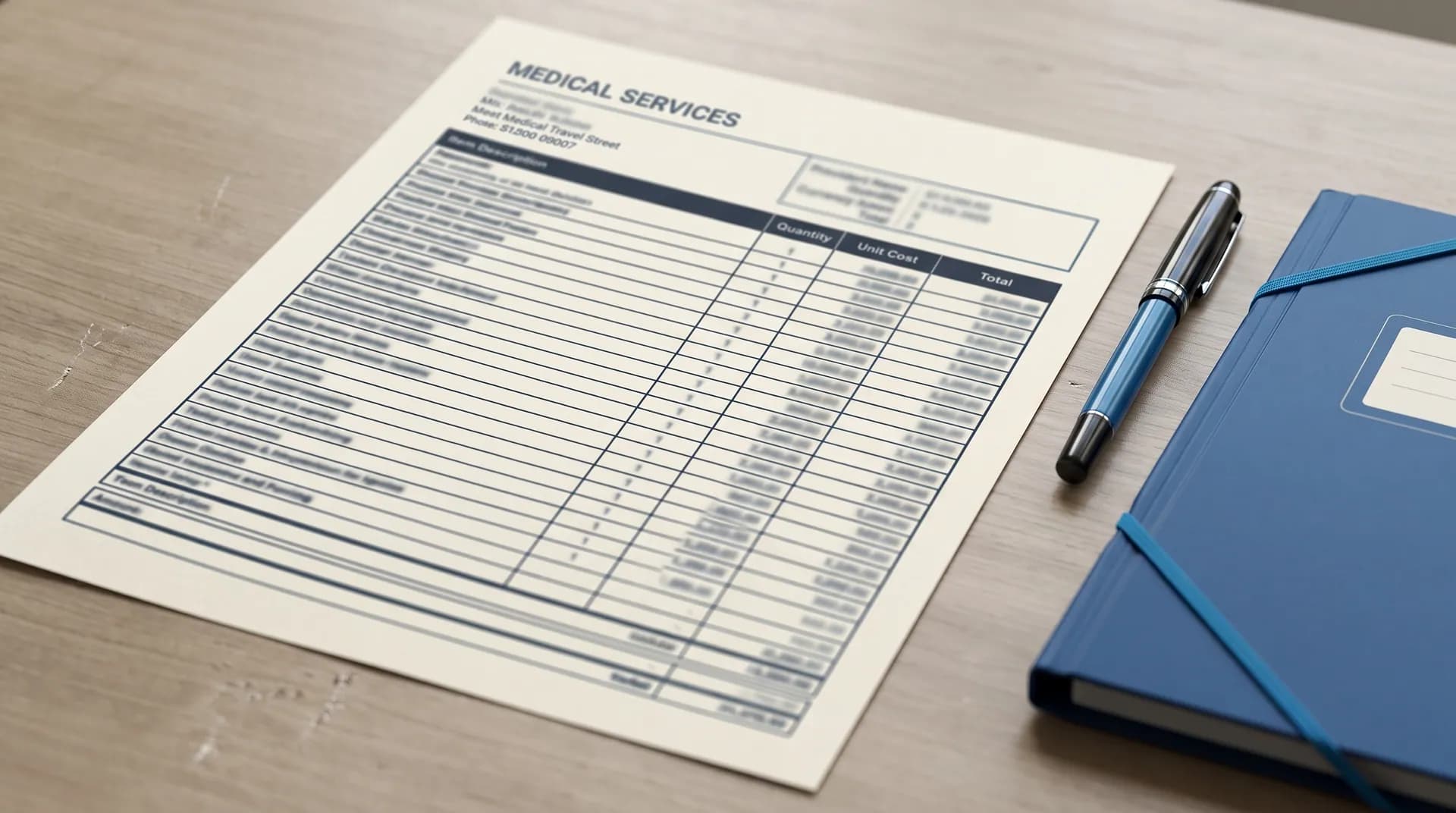
A usable quote names the clinical scope and then lists money against that scope. Useful inclusion themes often include surgeon professional fees, facility charges, anesthesia, planned tests, planned medicines or consumables that the facility will supply, and the assumed admission pathway. Useful exclusion themes often include companion costs, optional hotel upgrades, open-ended pharmacy needs after discharge, unplanned extended stay, and any care outside the named scope.
- Named clinical goals and whether functional work is included, excluded, or still conditional
- Surgeon, facility, and anesthesia lines with clear ownership
- Tests and medicines assumed in the price
- Admission or day-clinic assumption and what extends it
- Follow-up visits included before return travel
- Explicit exclusions and who pays if those items appear later
- Currency, validity date, deposit, cancellation, and change-approval rules
Separate a provider estimate from an Aysara patient-specific package in writing. A provider estimate describes clinical and facility charges for a proposed scope. An Aysara package, when offered, coordinates logistics around that clinical path. Do not let one document silently absorb the other. If both appear in your planning pack, label each page so later readers know which layer they are reading.
Complications and revisions are not predictable package add-ons
Public safety education discusses risks and the possibility that further procedures may be needed. That does not mean complications are a tidy optional line you can pre-buy like an airport lounge. Ask who pays for what if care expands, how revision discussions are opened, and what financial policy applies if more treatment is clinically advised later.
Treat contingency ownership as part of cost planning. A low headline that ignores complication policy can become the most expensive quote after an unexpected event. Serious budgeting holds space for uncertainty without pretending uncertainty has a fixed menu price.
Ask how records will support later care in Oman if costs or clinical needs continue after return. Financial policy and clinical continuity belong in the same conversation. A quote that ends at discharge without naming post-return ownership leaves a hole in the total journey cost.
Compare quotes on equal scope, not headline price
Line two quotes up only when they share the same proposed goals, named roles, facility assumptions, follow-up ownership, exclusions, currency basis, and validity rules. If one quote hides anesthesia or revision policy, it is not cheaper yet. It is less complete.
Walk away from rankings, "best deal" badges, and pressure to pay before exclusions are written. Price becomes useful after verification and consultation work make the scope honest. Until then, a lower number is often just a shorter list.
When you are ready to compare, use a one-page equal-scope table: clinical lines, travel lines, contingency ownership, and open questions. Fill it with dated answers from each offer. Blank cells are unfinished work, not negotiating leverage. Revisit the table after any clinical change; yesterday's equal scope may no longer be equal.
A calm next step
If provider verification is still open, return to How to choose a rhinoplasty surgeon and hospital. If you need the consultation question pack that unlocks a clear quote, use Rhinoplasty consultation questions. If the broader Oman-to-Iran sequence still needs structure, see How to plan rhinoplasty travel from Oman. For Aysara coordination, use the Rhinoplasty coordination page. Keep money talk attached to written scope, not to a catalogue rumor.
Sources
- Nikan IPD Service Package 2025-2026 (provider catalogue reference)
- American Society of Plastic Surgeons: rhinoplasty cost
- American Society of Plastic Surgeons: rhinoplasty overview
- American Society of Plastic Surgeons: rhinoplasty risks and safety
- CDC Yellow Book: Medical Tourism (accessed 2026-09-06)
Related articles

Rhinoplasty
How to Plan Rhinoplasty Travel from Oman: A Practical Guide
A rhinoplasty travel checklist from Oman to Iran covering case review, surgeon and hospital checks, quotes, travel documents, and follow-up.
Rhinoplasty
What Should a Rhinoplasty Travel Package Include?
A practical checklist for reading a rhinoplasty travel package: clinical care, logistics, exclusions, follow-up, changes, and written responsibilities.

Rhinoplasty
How to Choose a Rhinoplasty Surgeon and Hospital
How to choose a rhinoplasty surgeon and hospital using questions about training, licensing, facility safety, complications, and follow-up, not price alone.
Need help planning a trip?
Start with a short message by phone, email, or WhatsApp. Do not send medical documents through the first-contact form.