

Rhinoplasty
Does Rhinoplasty Hurt? Pain, Anaesthesia, and Recovery
Does rhinoplasty hurt? Learn what anaesthesia covers, what recovery may feel like, and when pain should be reported to the treating team.
The short answer is that the operation is performed under anaesthesia that keeps you unaware of the surgical work, while the hours and days afterward are a separate experience. Many people describe pressure, blockage, tenderness, or a dull ache rather than sharp pain, but the amount and pattern are personal. The anaesthetist and surgeon decide the approach after considering your health and the operation being planned.
Rhinoplasty is usually performed under general anaesthesia, although the anaesthetic options discussed in a particular setting can differ. The important question is not whether a website uses a reassuring phrase. It is whether the team explains what will happen, asks for your full history, tells you how discomfort will be managed, and gives you a route for asking about a problem after you leave.
During the operation: what anaesthesia means
Anaesthesia is the clinical plan used to keep you comfortable and appropriately unaware during the procedure. The American Society of Plastic Surgeons describes intravenous sedation and general anaesthesia as possible choices for rhinoplasty, with the doctor recommending the option for the individual patient. The NHS describes nose reshaping as usually carried out under general anaesthesia. These statements describe common practice, not a prescription for you.
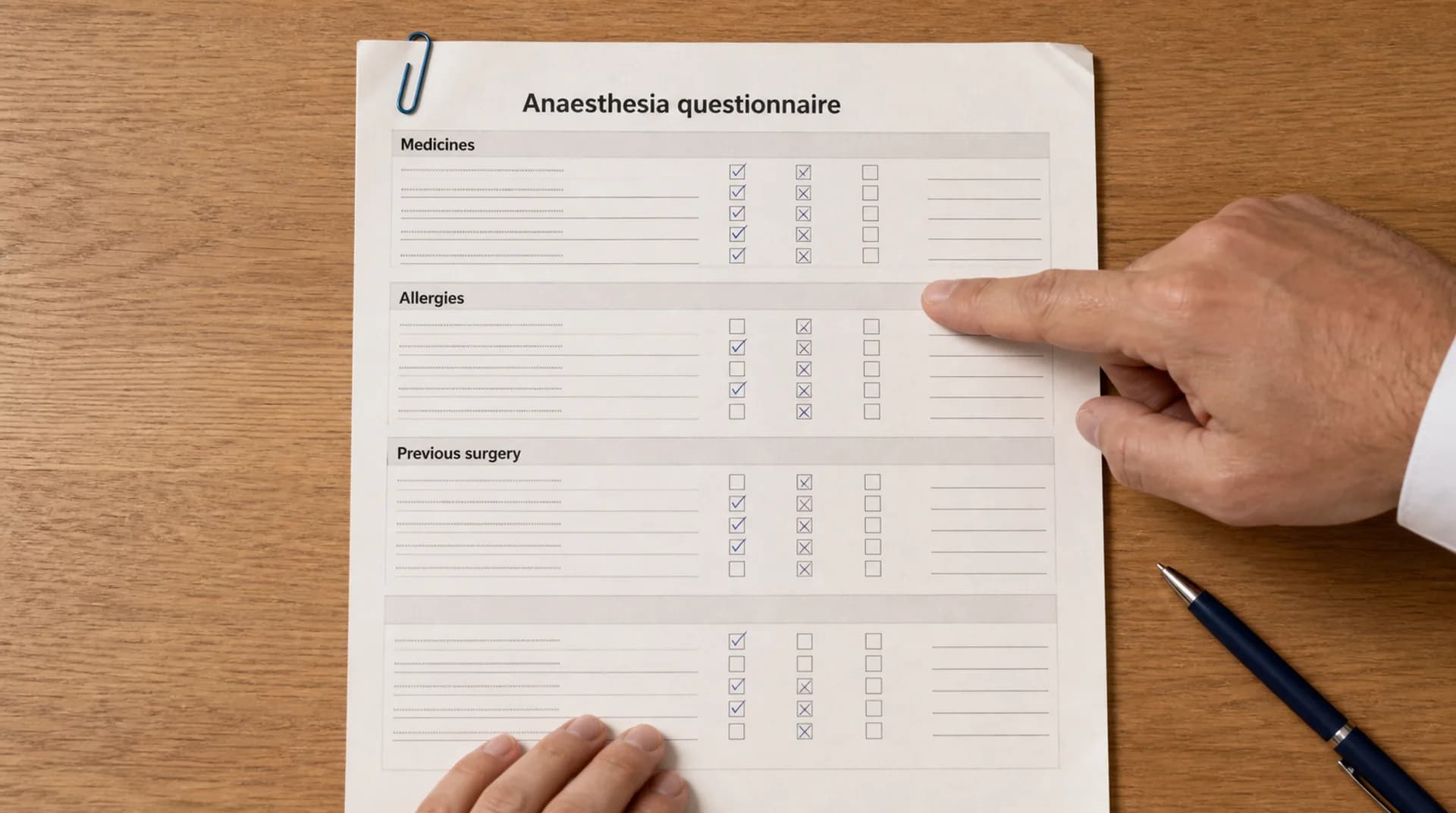
The plan also includes what happens before and after the operation. The anaesthesia team may ask about previous reactions, allergies, medical conditions, medicines, supplements, smoking, alcohol, and earlier procedures. They may explain when you must stop eating or drinking and how you will be monitored. Do not infer these instructions from an online article. Follow the written instructions from the hospital and ask if any part is unclear.
What the anaesthesia assessment covers
A complete history is not a formality. It gives the anaesthesia team information that may affect planning and monitoring. During a rhinoplasty consultation, professional patient guidance commonly asks you to discuss your goals for appearance and breathing, medical conditions, drug allergies, previous treatments, current medicines, vitamins, herbal supplements, alcohol, tobacco or drug use, and previous surgery. Tell the team even when a detail feels unrelated or embarrassing.
- Any allergy or previous reaction to an anaesthetic, medicine, adhesive, or other clinical product.
- Every medicine, vitamin, supplement, or herbal preparation you take, including products you buy without a prescription.
- Previous operations, difficult airway experiences, severe nausea, or other problems after anaesthesia.
- Breathing symptoms, sleep problems, heart or lung conditions, and any recent illness.
- Smoking, alcohol, or recreational drug use, because the team needs the accurate history rather than a socially comfortable version.
- The possibility of pregnancy or any other health fact the team asks you to disclose privately.
Do not stop a prescribed medicine or start a supplement because a general page suggests it. Ask the clinician who prescribed it and the anaesthesia team what applies. The same applies to common pain medicines, anti-inflammatory medicines, vitamins, and herbal products. A product that seems ordinary can still matter to a surgical plan or interact with another instruction.
The first hours: pressure, congestion, and a dry mouth
When you wake, the most noticeable sensation may not be a sharp pain. Your nose can feel blocked, tight, tender, or unfamiliar. A splint, tape, or other dressing may support and protect the structures while early healing begins. The NHS notes that people may have difficulty breathing through the nose for about a week and that painkillers may be provided to control pain or discomfort. The timing and instructions for your case come from your own team.
Mouth breathing can make the mouth and throat feel dry. You may feel tired, slow, or unsettled after anaesthesia. A companion can help with ordinary practical tasks if the hospital allows one, while the clinical team monitors you and decides when discharge is appropriate. Ask who is allowed to take you back to your accommodation and which symptoms or questions should be reported before you leave.
A useful discharge conversation should cover the written medicines plan, the dressing or splint, the first review, the contact route, and what to do outside clinic hours. You should not have to rely on memory while feeling tired. Keep the papers and contact details together, and ask for an interpreter if you need one.
The following days: what people often notice
Patient guidance from ENT Health says the amount of pain varies, with many patients describing it as minimal to moderate. It also says that pain of any intensity commonly lasts for a short early period, while tenderness or sensitivity to touch can last longer. Read that as population-level education, not as a timetable for your face. Your operation, health, medicines, healing, and any unexpected event can change the experience.
Some people find the blocked feeling and pressure more difficult than the pain itself. Others notice tenderness, a stiff or numb nose, facial swelling, bruising, headache, poor sleep, or difficulty concentrating. The fact that one sensation is common does not tell you whether your own symptom needs review. If something is worsening, unusual, or not responding to the plan you were given, contact the treating team.

Pain relief belongs to the hospital plan
Your surgeon or anaesthetist should explain which pain-relief medicines are part of your plan, how to use them, and what to do if they are not enough. A 2025 systematic review of postoperative pain management in septorhinoplasty found that the evidence covers both opioid and non-opioid approaches, but it does not create one regimen for every patient. Do not add an over-the-counter pain medicine, an anti-inflammatory medicine, a vitamin, or a herbal product without checking with the responsible clinician. ENT Health specifically advises patients to ask their doctor about medicines such as ibuprofen and not to use preparations that may affect healing unless the doctor approves them.
Write down the medicine name, the instruction, and the contact route the team gives you. If you are travelling from Oman, ask for the plan in a language you understand and confirm how to obtain the medicines during the stay and after returning home. Aysara can help organise the non-clinical communication, but it cannot select a medicine or change the dose.
When pain should prompt a call
Pain that is not relieved by the prescribed plan, becomes worse instead of gradually easing, or remains moderate to severe should be reported to the treating clinician. ENT Health advises a call when moderate to severe pain continues beyond the early period it describes, and the NHS advises contacting the clinic for severe pain or unexpected symptoms. Use the route supplied by your team rather than waiting for an online answer.
- Pain is getting worse rather than gradually improving.
- The prescribed plan does not control the pain or you cannot follow it because of a problem.
- A new symptom appears with the pain or the overall condition changes suddenly.
- You are unsure whether the symptom needs same-day review or what to do outside clinic hours.
For a sudden emergency after returning to Oman, use local emergency services. Do not wait for a coordinator to interpret a potentially serious symptom. The treating team can explain the planned clinical contact route, and Aysara can help pass a non-clinical message, but those roles are not substitutes for urgent care.
Will I be awake? Ask what applies to your operation
The answer depends on the anaesthetic plan selected for your operation and health. General anaesthesia is common for rhinoplasty, and other options may be discussed in some settings. Ask the anaesthetist to explain whether you are expected to be conscious of any part of the procedure, how you will be monitored, what recovery from the anaesthetic may feel like, and which instructions matter before discharge. Do not treat another patient's experience as your plan.
Questions to copy before the day
- Which anaesthetic approach are you considering for my planned operation, and why?
- What information about my health, medicines, supplements, allergies, and previous anaesthesia do you need?
- What should I stop or continue before the operation, and who should confirm that instruction?
- What may I notice when I wake, including blockage, pressure, dryness, tenderness, or tiredness?
- What is the written plan for pain relief, and who do I contact if it is not enough?
- Which symptoms need a prompt call, and what should I do outside clinic hours?
- When is the first review, and what must be checked before I leave Tehran?
- Who explains the plan to my companion and provides an interpreter if I need one?
The Oman-to-Tehran handover
If you are travelling from Oman, include the handover in your anaesthesia questions. Before leaving Tehran, ask for your discharge papers, medicine instructions, restrictions, follow-up schedule, treating-team contact, and the route for a concern after you return. The surgeon decides whether you are fit to fly and when, based on your case. A date on a travel calendar does not make that clinical decision.
Nikan's international-patient record includes Arabic and English translation support and English discharge reports. Aysara can help organise the non-clinical sequence and keep the agreed line clear from Oman. Clinical questions stay with Dr. Sara Arjang, Nikan, and the relevant treating team. For the broader recovery sequence, read Rhinoplasty recovery, week by week. For the wider decision fears, see The fears patients raise before rhinoplasty, answered.
If you want to understand the general Oman-to-Iran planning route, start with How to plan rhinoplasty travel from Oman. If an ultrasonic instrument has been mentioned, Piezo ultrasonic rhinoplasty: what the technique changes explains why the instrument name does not decide the operation. Aysara's non-clinical coordination route is described on the Rhinoplasty coordination page.
A clear answer, without a promise
Rhinoplasty is performed with anaesthesia so you are not expected to experience the surgical work as it happens. Afterward, people may notice pressure, blockage, tenderness, dry mouth, tiredness, or pain in different combinations and for different lengths of time. The reliable way to prepare is to disclose your full history, ask the anaesthesia team what applies to you, keep the written plan nearby, and contact the responsible clinician when the course is worsening or unexpected.
Sources
- NHS: nose reshaping (rhinoplasty) overview (accessed 2026-09-01)
- American Society of Plastic Surgeons: rhinoplasty procedure steps (accessed 2026-09-01)
- American Society of Plastic Surgeons: rhinoplasty consultation (accessed 2026-09-01)
- American Society of Plastic Surgeons: rhinoplasty risks and safety (accessed 2026-09-01)
- ENT Health: rhinoplasty patient pain management and discomfort (accessed 2026-09-01)
- PubMed: management of postoperative pain in septorhinoplasty, systematic review (accessed 2026-09-06)
- Aysara internal provider record: Nikan international-patient translation and discharge support
- Aysara internal surgeon record: Dr. Sara Arjang
Related articles

Rhinoplasty
How to Plan Rhinoplasty Travel from Oman: A Practical Guide
A rhinoplasty travel checklist from Oman to Iran covering case review, surgeon and hospital checks, quotes, travel documents, and follow-up.

Rhinoplasty
Rhinoplasty Recovery, Week by Week
Rhinoplasty recovery timeline: what may change from the first week through the first year, and which questions belong with your treating surgeon.
Rhinoplasty
Rhinoplasty Aftercare: Nose Tape, Splints, and Daily Care
Rhinoplasty aftercare explained: nose tape, splints, daily care, warning signs, and follow-up for patients travelling from Oman.
Need help planning a trip?
Start with a short message by phone, email, or WhatsApp. Do not send medical documents through the first-contact form.