
Rhinoplasty
Rhinoplasty Recovery, Week by Week
Rhinoplasty recovery timeline: what may change from the first week through the first year, and which questions belong with your treating surgeon.
Rhinoplasty recovery is usually most visible in the first couple of weeks, but the nose can continue to settle for a year or longer. Early recovery may include dressings, congestion, bruising, and swelling. Later changes are slower and quieter. This is a general timeline, not a date for work, exercise, or flying. Your surgeon's instructions decide what your case permits.
If you are travelling from Oman, do not turn a general timeline into a flight date, work date, or exercise date. A recovery plan has a handover in the middle: the treating team directs your care while you are in Tehran, and after you return home you need a clear route for clinical questions, documents, and non-clinical coordination. A calendar helps you prepare for conversations. It cannot clear you to travel or tell you what your nose should look like.
Day one to day seven: protection, congestion, and the first review
In the first week, a splint, tape, or other dressing may protect the nose while the initial healing begins. Some patients may also have internal packing or support, depending on the operation and the surgeon's practice. Nasal breathing can be difficult, so mouth breathing and a dry mouth may become more noticeable. Swelling and bruising around the eyes can be visible, and the nose may feel blocked, stiff, or numb.
People describe the first days in different ways. Pressure and congestion are common themes in public patient education, but pain and discomfort are still personal experiences. The pain and anaesthesia article in this series treats that question separately. Do not change medicines, remove a dressing, or use a product because an online timeline tells you to. Follow the written plan given to you by the treating team.
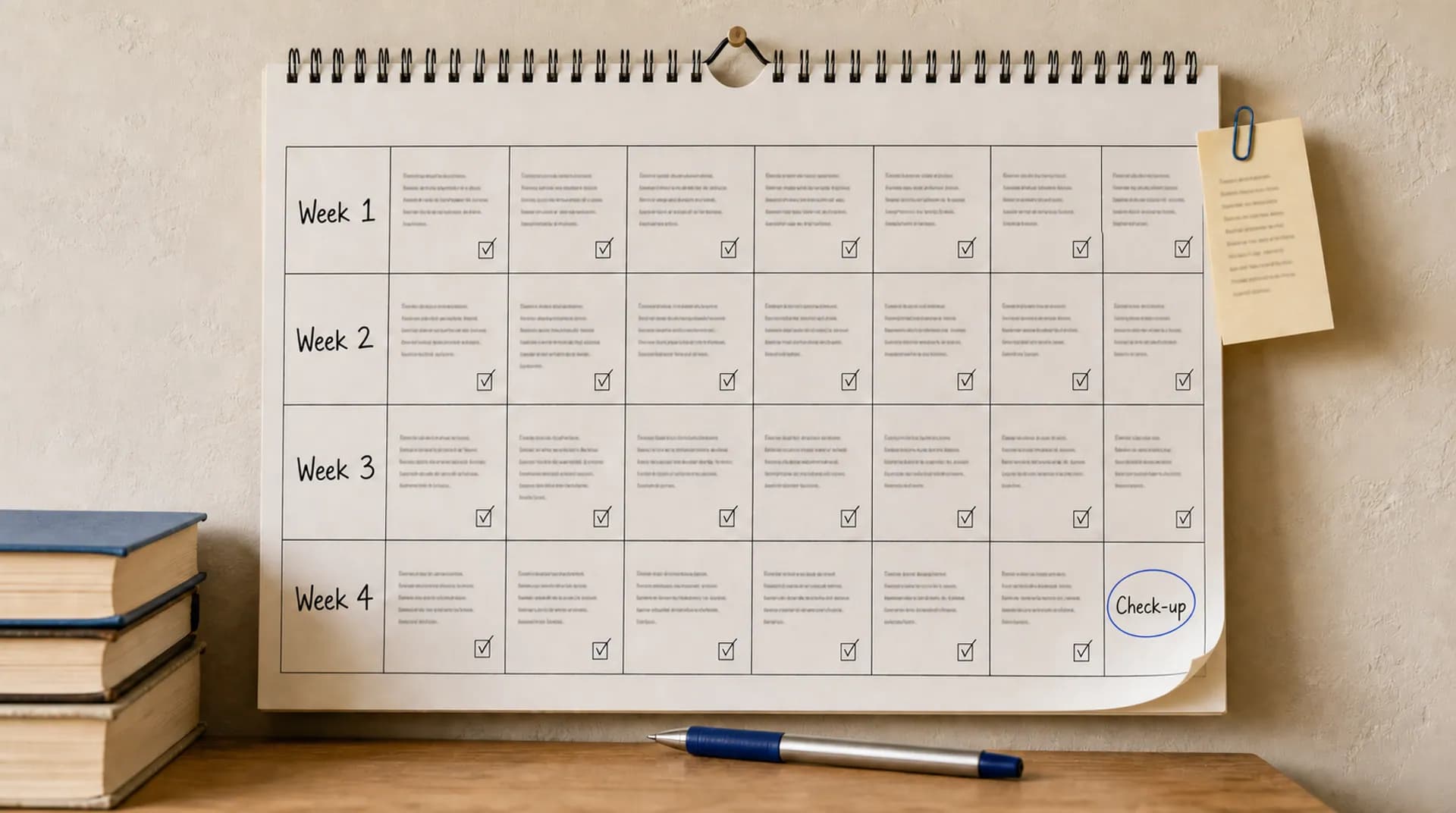
The first review is also a checkpoint, not a final verdict. The team may assess the dressing, the early healing, your general condition, and the next follow-up. The timing and content of that review belong to the treating team. If your operation involved more than one type of work, or if your health history adds a consideration, your instructions may differ from a simple educational timeline.
Week two to week four: the outside begins to look quieter
During the second to fourth week, an early dressing or splint may have been removed by the team, and bruising may be fading. That does not mean the nose has finished healing. Redness, swelling, stiffness, numbness, and a feeling that the nose is unfamiliar can continue. Some people begin returning to light work and social routines during this broad period, while others need longer. The deciding factors include the operation, the person's health, the work or activity involved, and the surgeon's assessment.
This is often the stage when comparison becomes misleading. You may notice every small change because you are looking at your face closely, while other people may see only that you are recovering. Day-to-day variation does not establish what your final result will be. Avoid judging the operation from one mirror check or one photograph, and do not borrow another patient's timetable.
Tape, splints, sleeping position, glasses, washing, exercise, and sun exposure all have their own practical questions. They are not one universal checklist. A later aftercare article in this series will address those objects and routines, but your surgeon's instructions remain the controlling plan for your case.
Month two to month six: quieter healing, slower changes
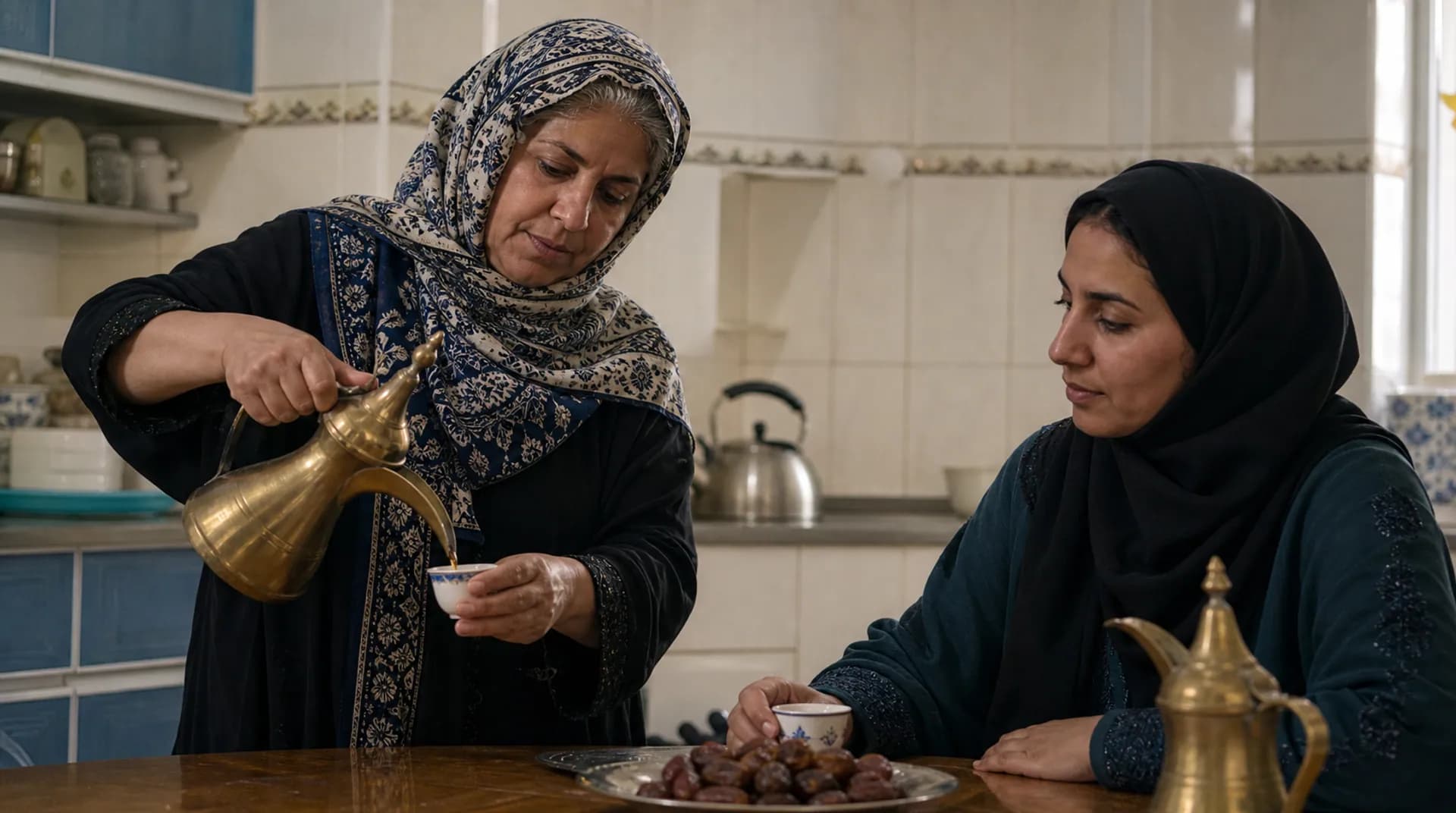
The middle months can be emotionally harder than the first week because the obvious dressing is gone while the result is still changing. Early swelling usually becomes less prominent, but it can fluctuate. The tip often settles more slowly than areas that changed earlier, and the nose may look different in the morning or after a busy day. A change that worries you is a reason to contact the treating team, not a reason to declare the result finished or failed.
At this stage, patience does not mean ignoring symptoms. It means separating a slow appearance change from a clinical concern and asking the right person. The surgeon may want an examination, a photograph taken in a consistent way, or another form of review. Do not massage, press, tape, inject, or otherwise alter the area unless the treating team has instructed you to do so.
Aysara's role is to help keep the communication and travel record organised. It is not to interpret a photograph, approve an activity, or tell you that an uneven appearance is normal. The treating surgeon owns the clinical interpretation.
The first year and beyond: the visible timeline is not the settled result
Public guidance from the NHS and the American Society of Plastic Surgeons describes a recovery in which initial swelling subsides over the early period but the nasal contour can continue to refine over many months, sometimes up to a year. Some cases take longer. The point is not to assign a finish date to every patient. It is to understand why an early appearance, including an appearance at three months, should not automatically be treated as the settled result.
Skin thickness, the work performed, previous surgery, healing response, and the surgeon's method can all affect the pace of visible change. A general article cannot calculate that pace for you. If your surgeon has given you a review schedule, keep it even when the nose looks calmer. A quiet-looking week is not the same as completed healing.
What is a question for the team, and what needs urgent help?
A recovery article should not tell a remote reader that a particular symptom is normal. Instead, use the written discharge plan and the agreed contact route. Contact the treating team promptly about severe or increasing pain, unexpected symptoms, significant bleeding, fever, or a sudden change that concerns you. Ask which number or service should receive the message outside clinic hours.
- Use the treating team's urgent route for symptoms that are worsening or unexpected.
- Use local emergency services in Oman for an emergency after you return, especially if there is serious breathing difficulty, heavy bleeding, collapse, or another immediate danger.
- Do not wait for a coordinator to interpret a potentially urgent symptom.
- Keep discharge papers, medicines, and the surgeon's contact route available to you and your companion.
The risks and warning-signs article in this series will go into escalation in more detail. It will not replace local emergency services or the instructions for your own operation. The same rule applies here: general education can help you recognise when to ask, but only the relevant clinical team can assess your case.
The Oman-to-Tehran handover
Before you leave Tehran, the treating surgeon and hospital should explain the discharge plan, the medicines and restrictions that apply to you, the follow-up route, and whether the clinician considers you fit to travel. Fitness to fly is not an assumption that comes from the number of days on a calendar. It is a clinical decision for your case.
After you arrive in Oman, keep clinical questions with the treating team through the agreed channel. Aysara can help organise non-clinical communication, translation, travel records, and the route for passing a question to the relevant team. Aysara does not diagnose a symptom, change a prescription, clear exercise, or replace local emergency care. Agreeing these roles before the flight makes the middle of recovery less confusing.
For the wider planning sequence, read How to plan rhinoplasty travel from Oman. For questions to take into the consultation, use Rhinoplasty consultation questions. If piezo has been mentioned in your plan, Piezo ultrasonic rhinoplasty: what the technique changes explains what an instrument can and cannot tell you. For Aysara's non-clinical route, see the Rhinoplasty coordination page.
A calm way to use the timeline
- Use the first week to follow the written protection and medication plan, not to judge the final appearance.
- Use weeks two to four to ask what can be resumed, based on the treating surgeon's review.
- Use the middle months to record concerns and send consistent information rather than comparing daily changes.
- Use the longer timeline to keep scheduled reviews and ask before changing care or activity.
- Before returning to Oman, make sure clinical ownership, emergency contacts, and non-clinical coordination are written down.
Recovery is not a race to look normal. It is a sequence of protection, review, gradual change, and communication. If a date or instruction matters to your health, get it from the team responsible for your operation and keep it with your discharge papers.
Sources
- NHS: nose reshaping (rhinoplasty) overview (accessed 2026-08-31)
- American Society of Plastic Surgeons: rhinoplasty recovery (accessed 2026-08-31)
- American Society of Plastic Surgeons: rhinoplasty risks and safety (accessed 2026-08-31)
- ENT Health: rhinoplasty patient FAQs (accessed 2026-08-31)
- Dr. Sara Arjang provider archive: pre- and post-operative care for rhinoplasty (retrieved 2026-08-23, structure and patient questions only)
Related articles

Rhinoplasty
How to Plan Rhinoplasty Travel from Oman: A Practical Guide
A rhinoplasty travel checklist from Oman to Iran covering case review, surgeon and hospital checks, quotes, travel documents, and follow-up.

Rhinoplasty
Rhinoplasty Swelling: When Will the Final Result Show?
When does swelling go down after rhinoplasty? Learn why it changes in stages, why the tip may take longer, and when to ask your surgeon.
Rhinoplasty
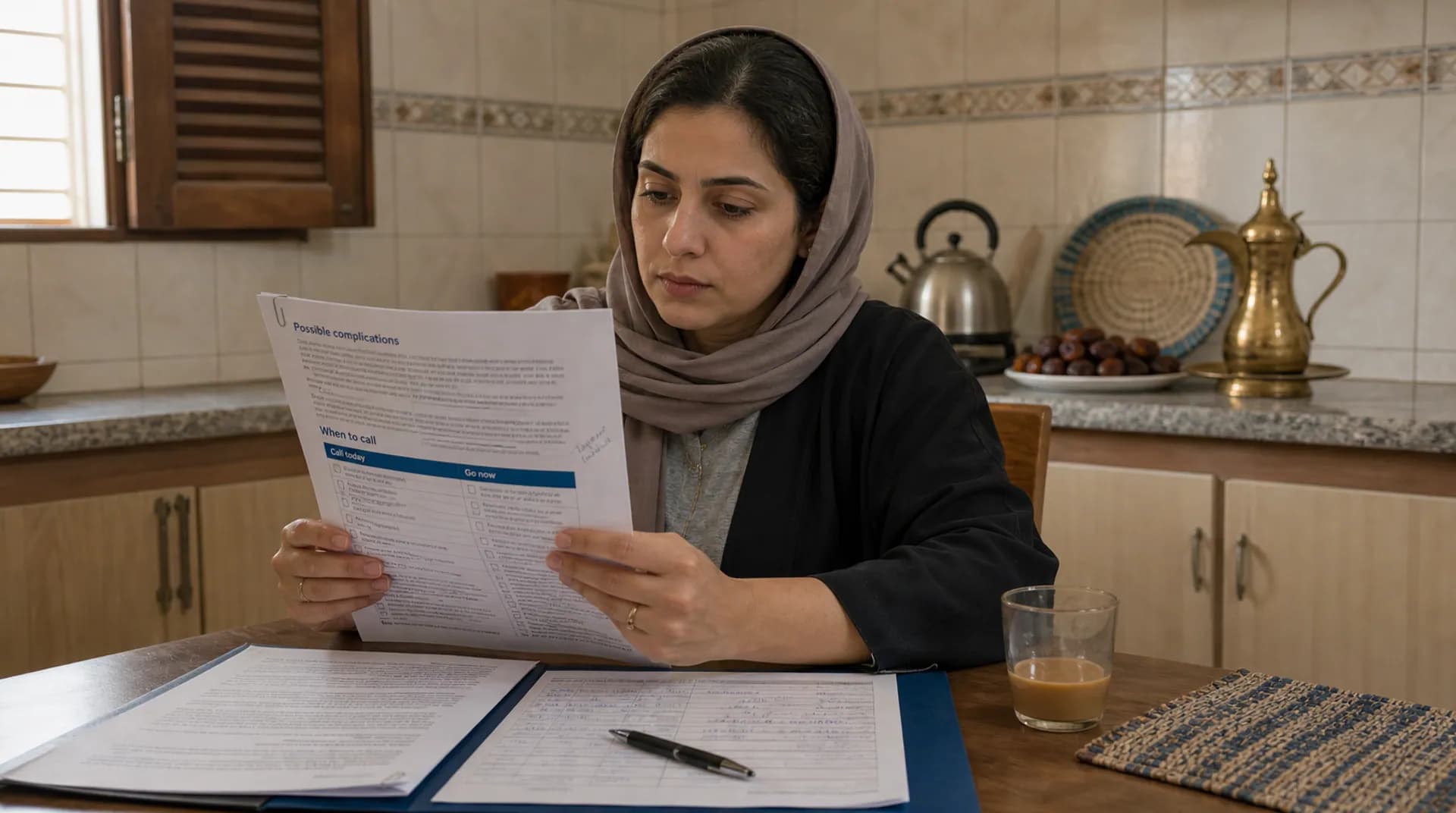
Rhinoplasty Risks, Complications, and Warning Signs
Rhinoplasty risks and complications: warning signs, emergency boundaries, informed-consent questions, and a cross-border contact plan from Oman.
Need help planning a trip?
Start with a short message by phone, email, or WhatsApp. Do not send medical documents through the first-contact form.