
Rhinoplasty
Rhinoplasty Risks, Complications, and Warning Signs
Rhinoplasty risks and complications: warning signs, emergency boundaries, informed-consent questions, and a cross-border contact plan from Oman.
The useful question is not whether rhinoplasty is without risk. It is not. The useful questions are what the operation involves, which effects may be part of early healing, which problems need a prompt clinical response, and how the treating team can be reached. No article can tell you which symptom is expected in your case. Your surgeon's examination and written instructions take priority over general information.
Before you decide, read the risk discussion slowly and ask for an explanation in words you understand. A proper consent conversation should leave room for uncertainty, alternatives, and the option not to proceed. You should never feel that asking about complications is a sign that you are difficult or uncommitted. It is part of making a decision about surgery.
General surgical and anaesthetic risks
Like other operations, rhinoplasty may involve risks related to anaesthesia, bleeding, infection, wound healing, medication reactions, and blood clots. The exact discussion depends on your health, your medicines, the planned operation, and the anaesthesia plan. A list on a website cannot replace the clinician who knows your history. Tell the team about illnesses, allergies, medicines, vitamins, herbal products, alcohol, tobacco, previous operations, and any previous reaction to anaesthesia.
General information can also help you notice what the consent conversation has not covered. Ask who will explain anaesthesia, what you will be monitored for, what happens after the operation, and which symptoms should trigger a call. The treating team should explain how likely the important risks are for the proposed plan and how they would be managed if they occurred.
Risks specific to nose surgery
Nose surgery changes bone, cartilage, soft tissue, or more than one of these structures. Possible problems include bleeding, infection, persistent congestion or difficulty breathing, altered sensation or numbness, a change in smell, scarring, asymmetry, irregularities, or an appearance that does not meet the patient's expectations. A septal perforation is another recognised complication. Some problems may need further assessment or treatment, and not every problem can be corrected completely.
Some early effects can look alarming without proving that a complication has occurred. Swelling, bruising, temporary congestion, light drainage, soreness, and a stiff or numb feeling can occur after surgery. That does not give you permission to ignore a change that is worsening, persistent, or different from the instructions you received. The safest comparison is with the treating team's plan, not with a photograph or a timeline found online.
An outcome you dislike is still a real outcome
A patient may be medically well and still feel that the appearance or breathing result is not what they expected. That concern deserves a clinical conversation. It is not a moral failure, and it is not proof that the patient asked for the wrong thing. Healing, anatomy, communication, and expectations can all shape how a result is experienced. The first step is assessment, not a rushed decision about another operation.
Ask how the team evaluates an unsatisfactory result, when they consider healing mature enough to assess, and what options exist if a concern remains. Revision surgery is a separate decision with its own assessment, uncertainty, and risks. The primary and revision rhinoplasty article in this series explains that distinction. For now, the important point is to make sure your consent discussion includes the possibility that further care may be needed.
Warning signs that need contact today
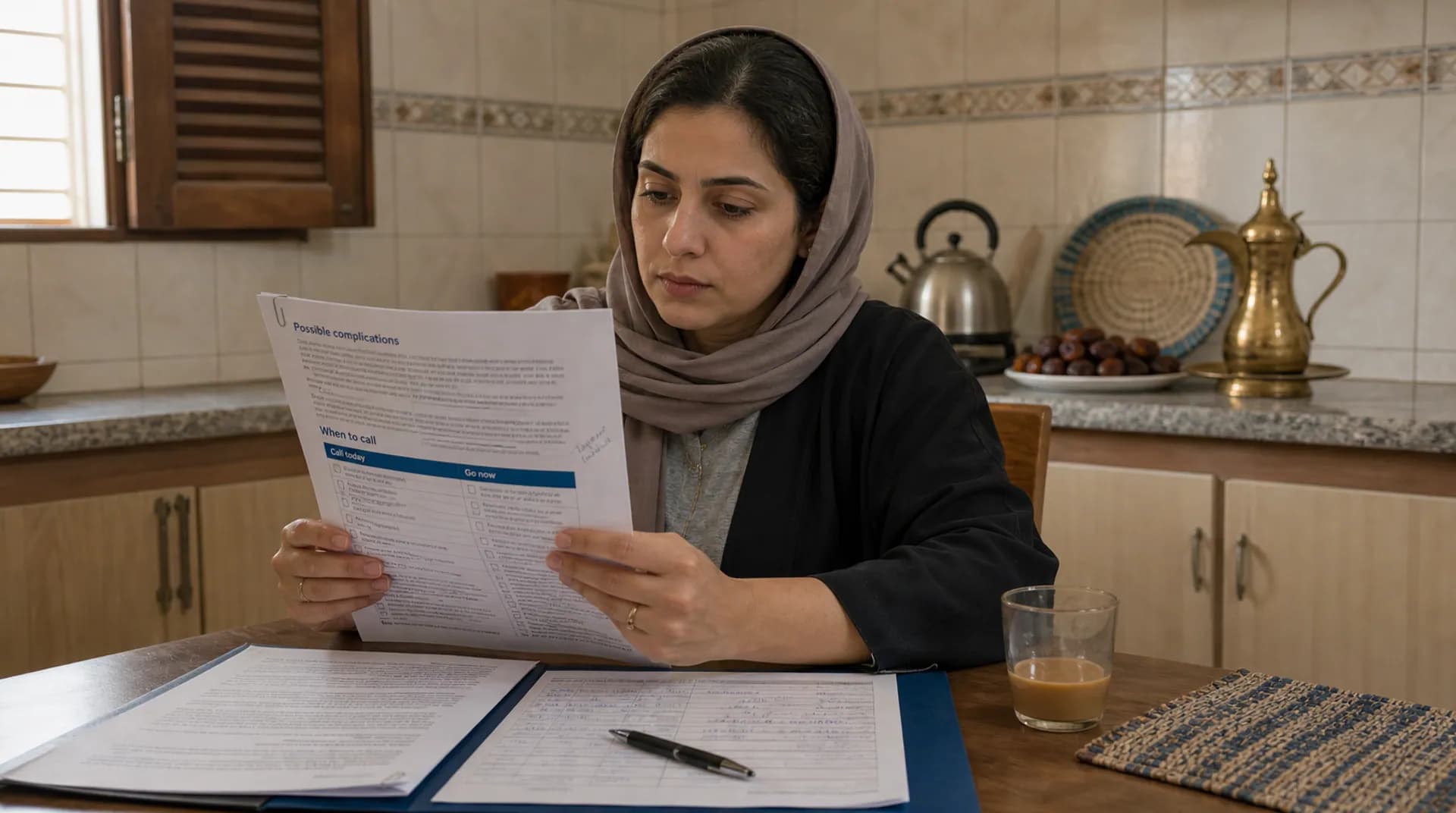
Your surgeon should give you a personalised list. In general, contact the treating team promptly if bleeding or drainage does not settle as instructed, if pain or swelling is getting worse rather than following the expected pattern, or if you develop increasing redness, fever, or another new concern at the surgical site. Contact them as well if congestion or breathing difficulty is not behaving as the team explained. Do not wait for an online article to decide whether your symptom is important.
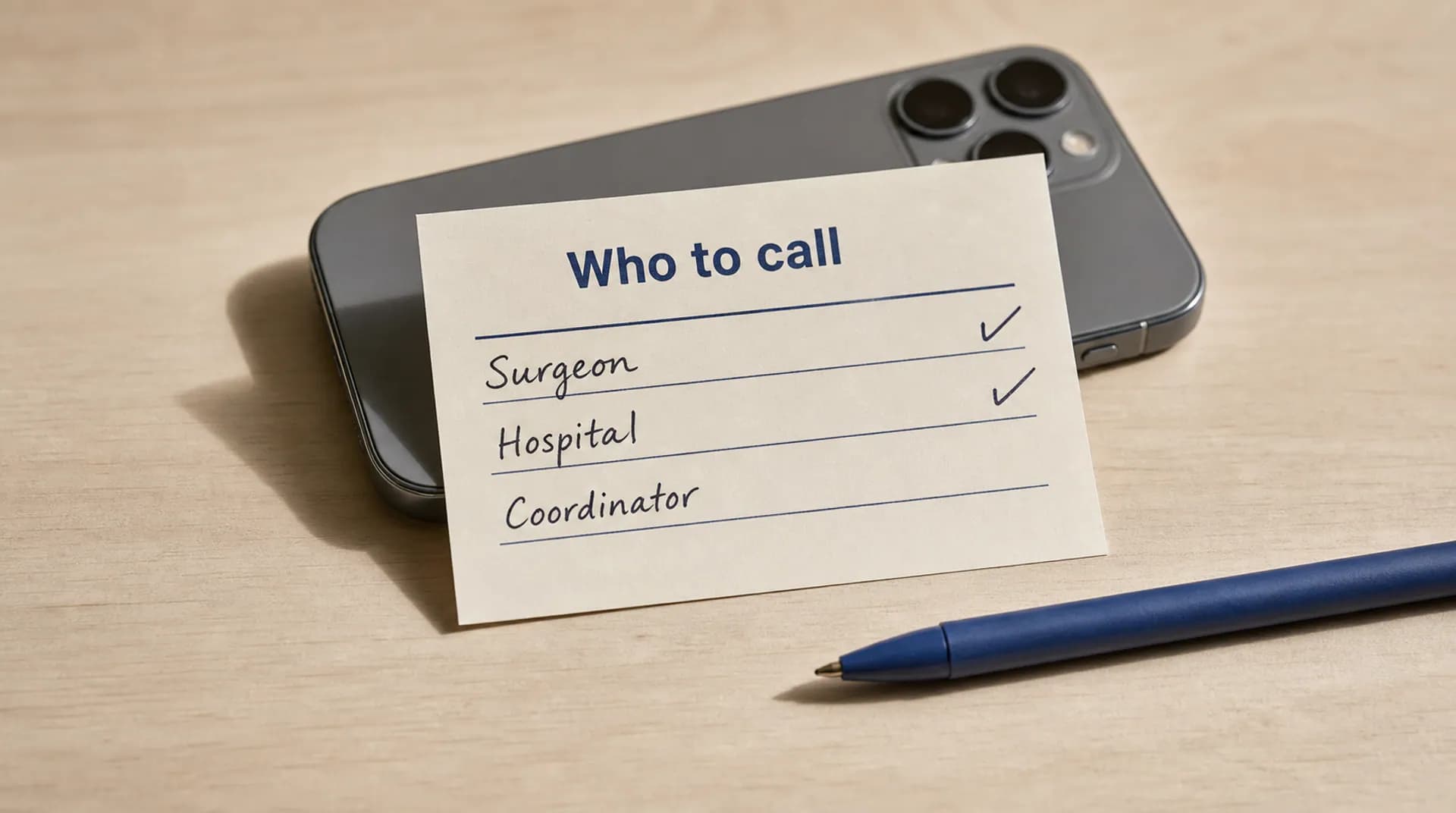
- Keep the treating team's written contact route available.
- Describe when the change started, whether it is worsening, and what instructions you have already followed.
- Send photographs only through the secure channel the clinical team approves, not through public comments or advertising forms.
- If you are in Oman, tell Aysara about the non-clinical coordination problem so it can help route the question, while the treating clinician remains responsible for clinical advice.
Warning signs that mean emergency care now
A short emergency list is useful, but it is never exhaustive. Seek emergency help immediately for severe trouble breathing, collapse, loss of consciousness, or heavy bleeding that does not stop. Use local emergency services in Oman if you are in Oman. Do not wait for Aysara, the hospital, or a message from the surgeon to respond before calling emergency services. Once you are safe, the treating team can be informed through the agreed route.
If you are still in Iran, ask before travel which local emergency facility and contact route apply to you. If you have already flown home, the emergency facility in Oman is the first point for an emergency. Aysara cannot diagnose an emergency, prescribe treatment, or replace local emergency care. The purpose of a written plan is to reduce confusion, not to delay urgent help.
The cross-border question: who owns what?
Cross-border care adds a practical risk: the patient and the treating team may be in different countries when a question appears. Before you travel, ask who gives the clinical discharge instructions, who receives a clinical message after you return to Oman, how the surgeon is contacted outside ordinary hours, and what happens if an in-person examination is needed in Oman. Ask for the answer in writing, including responsibilities, exclusions, and any financial terms.
For Aysara's current rhinoplasty route, Dr. Sara Arjang and Nikan are the clinical parties. Nikan supplies English and Arabic translation for international patients, and aftercare is with Nikan and the doctor. Aysara coordinates the non-clinical journey and can help route a non-clinical question or organise communication. It does not make Aysara the clinical owner of a symptom. Read the rhinoplasty coordination page and planning guide for travel from Oman for the wider sequence, then ask the treating team to confirm the clinical escalation details for your case.
What can reduce avoidable risk?
Risk cannot be removed, but preparation can make the decision and the recovery safer to manage. Give a complete medical history. Do not hide medicines, supplements, smoking, allergies, previous surgery, or breathing concerns because you fear losing the date. Follow the surgeon's instructions about medicines, food, activity, wound care, and travel. Use a qualified surgeon and a proper facility, and do not fly or resume activity until the treating team clears you for your situation.
Travel planning belongs beside clinical planning. Keep your consent information, discharge instructions, medication list, contact route, and any agreed package terms together. The rhinoplasty recovery guide explains why a general timeline cannot authorise your return to work, sport, or travel. Your treating surgeon's instructions remain the decision for you.
What informed consent should cover
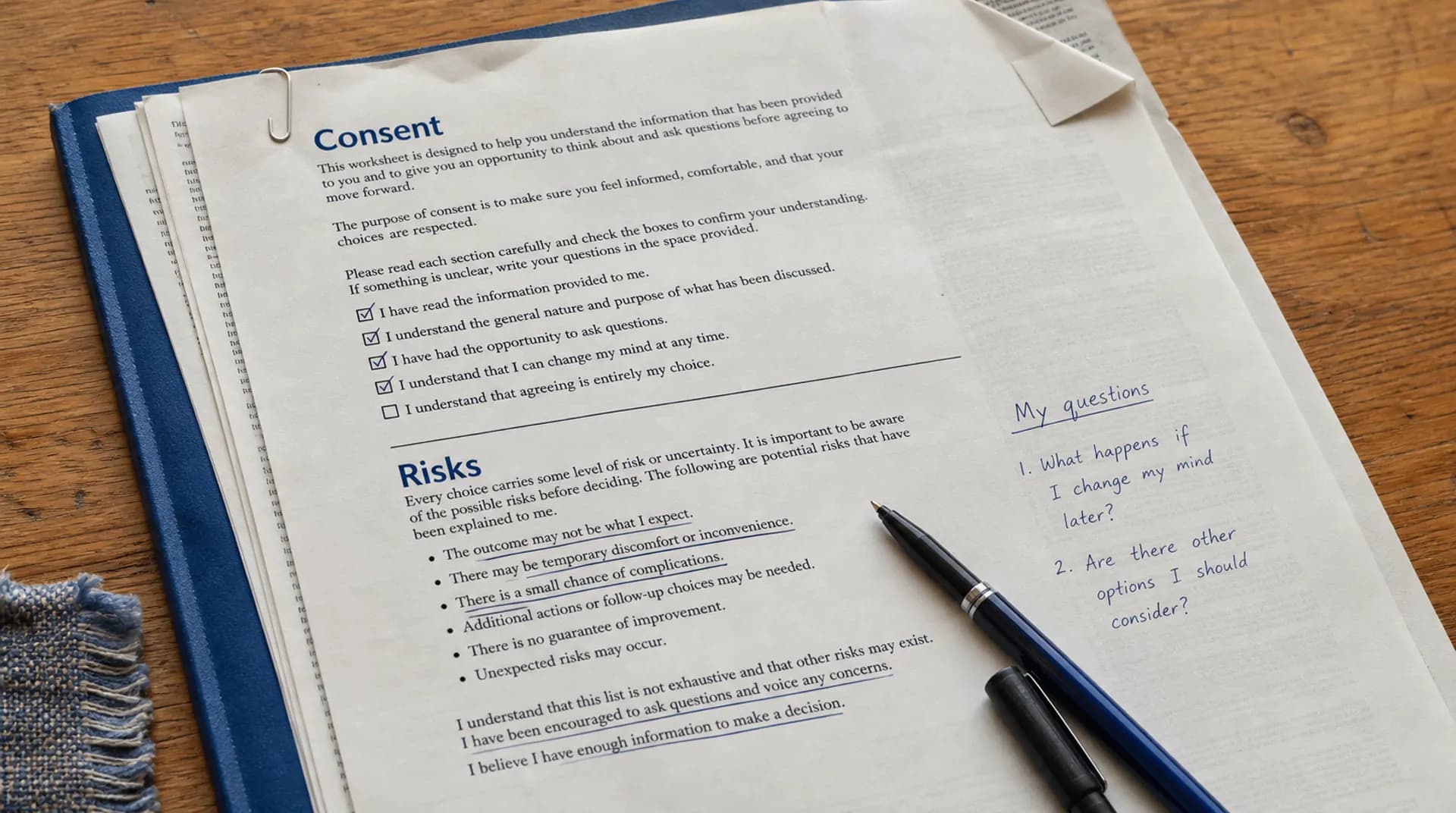
Consent is not a signature collected after the important decision has already been made. It is a process in which the clinician explains the proposed operation, expected benefits, material risks, alternatives, uncertainties, and likely recovery needs. You should have time to ask questions and to say that you do not understand. If the answer changes the way you think about the operation, you can pause and reconsider.
- What is the proposed change, and what is outside the scope of the operation?
- What risks matter most for my health, anatomy, breathing, and medicines?
- Which early symptoms are expected, and which require a same-day call or emergency help?
- What is the follow-up route while I am in Iran and after I return to Oman?
- What happens if I am unhappy with the result or need additional treatment?
- Which complication, revision, emergency, and travel costs are included, excluded, or still unresolved in the written package?
A safer next step is a better question
Do not use a risk list to frighten yourself into a decision, and do not let reassurance close the conversation before your questions are answered. Use it to prepare for a direct discussion with the treating surgeon and anaesthesia team. The consultation questions guide can help you organise that discussion. Aysara can explain the non-clinical route from Oman, while Nikan and the treating surgeon provide the clinical assessment, consent, treatment, and follow-up instructions.
If you are considering rhinoplasty abroad, the decision is not complete until you know who to call, what to do in an emergency, and what the written package says about unresolved responsibilities. A clear answer may support proceeding, taking more time, or deciding not to proceed. All three are legitimate outcomes of an informed decision.
Sources
- NHS: nose reshaping (rhinoplasty) overview (accessed 2026-09-01)
- American Society of Plastic Surgeons: rhinoplasty risks and safety (accessed 2026-09-01)
- American Society of Plastic Surgeons: rhinoplasty consultation (accessed 2026-09-01)
- ENT Health: rhinoplasty patient FAQs (accessed 2026-09-01)
- PubMed: incidence of postoperative adverse events after rhinoplasty, systematic review (accessed 2026-09-01)
- Aysara internal provider record: Nikan international-patient translation and follow-up support
- Aysara internal surgeon record: Dr. Sara Arjang
Related articles

Rhinoplasty
How to Plan Rhinoplasty Travel from Oman: A Practical Guide
A rhinoplasty travel checklist from Oman to Iran covering case review, surgeon and hospital checks, quotes, travel documents, and follow-up.

Rhinoplasty
Rhinoplasty Recovery, Week by Week
Rhinoplasty recovery timeline: what may change from the first week through the first year, and which questions belong with your treating surgeon.

Rhinoplasty
Primary vs Revision Rhinoplasty: Why the Difference Matters
Primary vs revision rhinoplasty: how previous surgery changes assessment, records, expectations, and the questions to ask before another operation.
Need help planning a trip?
Start with a short message by phone, email, or WhatsApp. Do not send medical documents through the first-contact form.