Rhinoplasty
Rhinoplasty Fears Before Surgery: Questions and Honest Answers
Honest answers to common rhinoplasty fears about regret, recovery, family reactions, language, work, and travelling from Oman.
Yes, your worries are reasonable. Being frightened before elective surgery is ordinary, even when the idea has been on your mind for a long time. Fear is information about what you still need to understand, not a signal that you must book quickly. You are allowed to ask the same question twice, ask for an explanation in your language, take the written plan home, or decide not to proceed.
Rhinoplasty is a personal medical decision, not a deadline created by a message, a photograph, or a travel offer. If you are considering a journey from Oman, there are two decisions to keep separate: whether the operation is right for you clinically, and whether the travel and communication plan is clear enough for you to consider it. A coordinator can help with the second. Only the treating clinicians can answer the first.
A 2026 systematic review of aesthetic rhinoplasty describes motivation, psychological readiness, social context, and expectations as factors linked to how patients experience results. That does not turn ordinary fear into a diagnosis. It supports taking the concern seriously, asking for clear clinical answers, and postponing a decision when you do not yet understand the plan.
Start with the fear, not with a deadline
A useful conversation does not begin by trying to talk you out of being nervous. It begins by naming the worry precisely. Are you thinking about how the nose may look, the possibility of an unwanted result, the anaesthetic, the early recovery, being away from Oman, family reactions, language, work, or the possibility that you will change your mind? Each question needs a different answer and sometimes a different person to answer it.
What if it looks obviously operated on?
No surgeon can promise that a future nose will look natural, invisible, or exactly like a reference photograph. A consultation should explore what you mean by a natural result, what change you are asking for, and what the surgeon thinks is realistic for your anatomy. Facial proportion, skin, bone, cartilage, healing, and the actual scope of surgery all matter. A social-media image is not a clinical plan and another person's result is not a forecast for you.
The right next step is not to search for a more convincing promise. Ask the surgeon to explain which parts of your goal may be possible, which parts may not be, and what trade-offs you should understand. It is also reasonable to ask how uncertainty will be handled if the early appearance changes during healing. The NHS describes rhinoplasty as a complex operation whose results cannot be guaranteed, so an honest discussion of limits is part of good consent, not a lack of confidence.
What if I regret it?
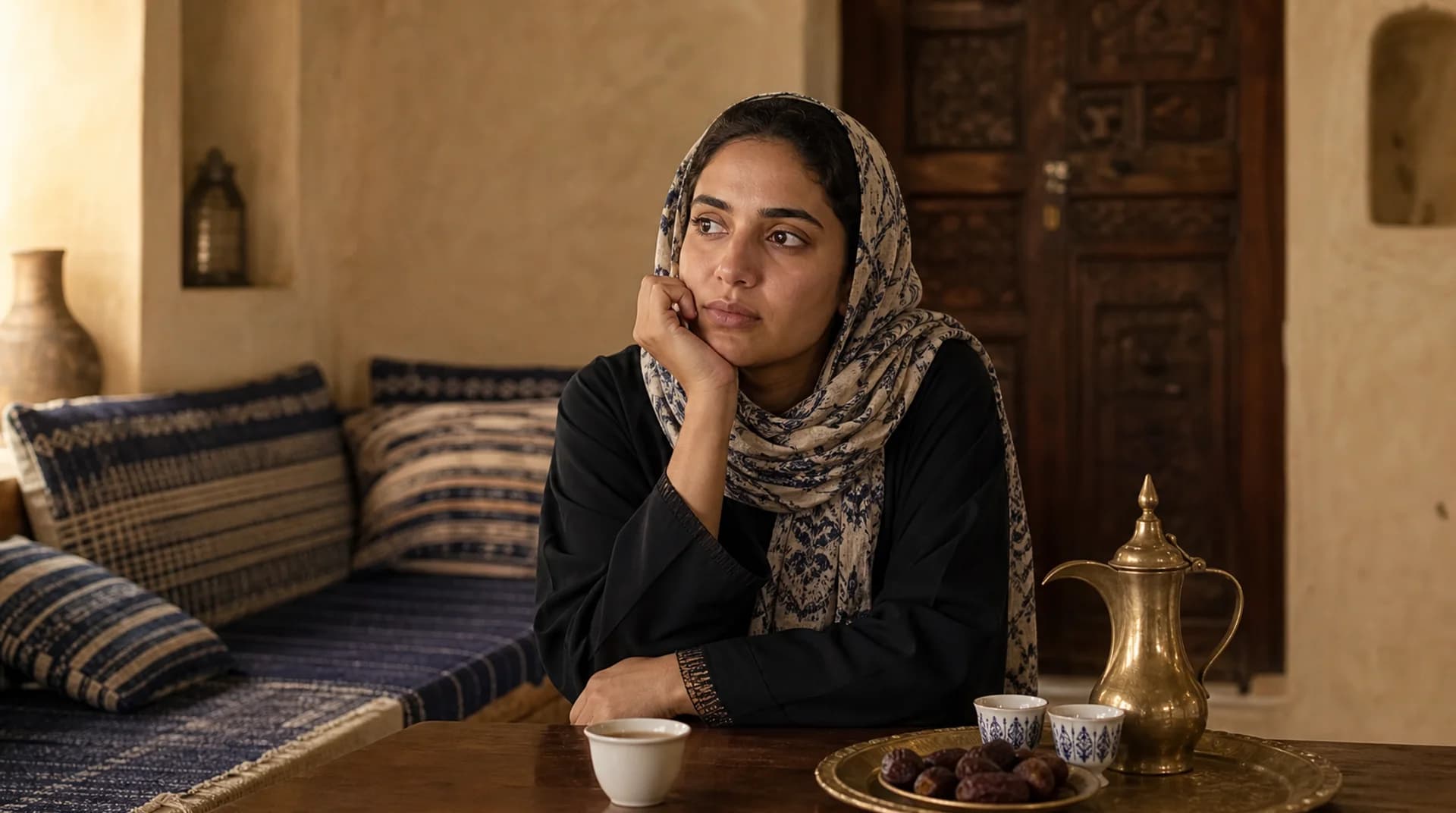
Regret is not prevented by finding the most enthusiastic page. It is reduced by making the decision slowly enough to understand the proposed operation and by choosing a surgeon who can tell you when a request is not suitable. You should know what the consultation has assessed, what alternatives were discussed, which risks matter to your case, what recovery may involve, and how follow-up will work before you decide.
- Describe the change you want in your own words rather than relying only on a celebrity or social-media image.
- Tell the surgeon about your health, medicines, previous surgery, breathing concerns, and any past reaction to anaesthesia.
- Ask what the proposed operation can change and what it cannot change.
- Ask what would make the surgeon delay, investigate, or advise against surgery.
- Take time to read the consent information and the patient-specific quote before paying or booking travel.
Early swelling can also make a result look unfamiliar while the tissues heal. The recovery and swelling articles in this series explain why an early appearance is not the settled result, without turning a general timeline into a prediction. Read Rhinoplasty recovery, week by week and Swelling and final results after rhinoplasty before using a photograph to judge what happened.
What if something goes wrong while I am far from home?
This fear has a real basis. Travelling for surgery changes the practical distance between you and the treating team, and it makes the handover after returning to Oman important. No route removes the possibility of complications. Before you agree to a date, ask who gives the discharge instructions, who answers a clinical question after you return, which route is used outside clinic hours, and what you should do if you need an examination in Oman.
Ask for the arrangement in writing rather than accepting a general sentence about support. The written plan should distinguish clinical decisions from coordination. The treating surgeon and hospital own assessment and treatment. Aysara can help pass a non-clinical question to the right contact and keep the travel record organised, but it does not diagnose symptoms, alter medicines, or replace local emergency services in Oman.
- Who is responsible for clinical advice while you are in Tehran?
- Who should receive a message after you return to Oman?
- Which symptoms require the treating team to respond promptly, and which route should you use outside clinic hours?
- What documents, medicines, restrictions, and follow-up instructions will you take home?
- If an in-person assessment is needed in Oman, who explains the next clinical step?
- Which costs or responsibilities are included, excluded, or still unresolved in the written package?
What if my family judges me?
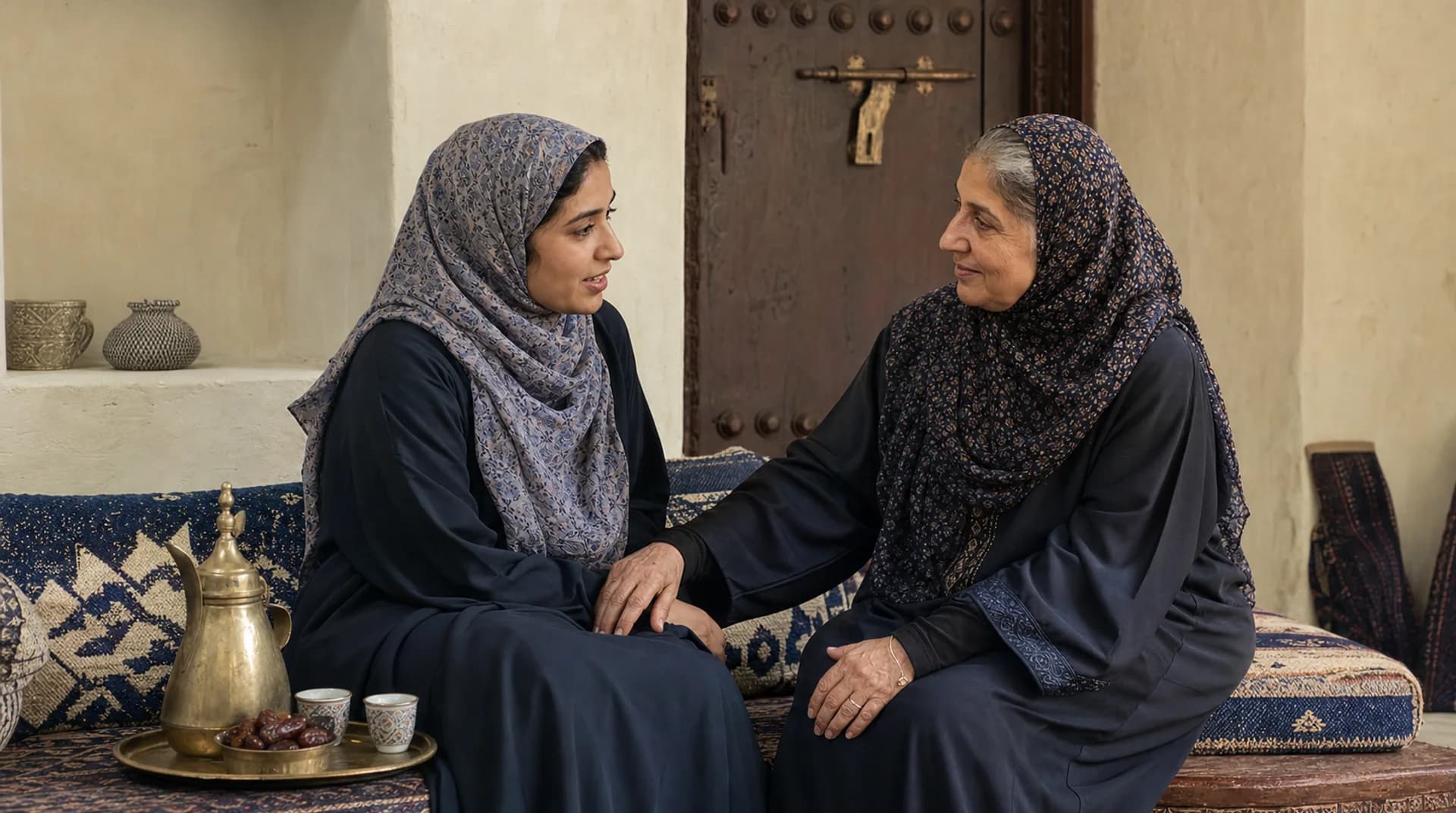
Family reactions are personal and cannot be predicted by a medical article. Some people want close family involved, while others prefer to share the decision with one trusted person. You do not need to turn a private medical decision into a public vote. You can decide who should know, what information you want to share, and who may accompany you, while still giving the clinical team the complete history it needs.
If someone is accompanying you, ask them to support your questions rather than answer for you. A companion can help with travel, notes, and ordinary tasks, but they should not be treated as the person who decides whether surgery is appropriate. Aysara's role is to coordinate the journey around the patient and the clinical team, not to persuade a family member or settle a disagreement.
What if I cannot speak freely in my language?
You should not consent to an operation while important questions remain unclear. Dr. Sara Arjang works in Farsi and some English. Nikan's international-patient department records Arabic and English translation support and Arabic and English forms. The practical question is not whether a website lists a language. Ask who will interpret the consultation, the consent discussion, the discharge instructions, and the follow-up conversation, and how you can ask for clarification when a term is unfamiliar.
Aysara answers first contact in Arabic and can help organise non-clinical communication. Clinical meaning must still be confirmed by the treating team. If you do not understand a proposed change, risk, restriction, or follow-up instruction, pause and ask for it to be explained again before signing or travelling.
What if I will be pressured into deciding?
Pressure is a reason to slow down. A proper consultation is a place to ask questions, hear alternatives, discuss uncertainty, and decide whether you want to continue. It is not a test of enthusiasm. You should be able to leave with the information you need, check your travel and work responsibilities, and return with more questions if something is unclear.
Aysara does not require payment to ask a first question. First contact, case review, and a written package come before any payment in the documented route. That does not mean a clinical review will recommend surgery or that a package will suit you. It means you can ask what the process is without treating the question as a commitment to operate.
What if I cannot hide the early recovery at work?
Do not plan leave around a promise that you will look normal on a particular date. Early swelling, bruising, congestion, dressings, and changes in how you feel can be visible or inconvenient, and recovery differs by operation and person. Ask the treating surgeon what your work and activity questions mean after assessment. For the broad sequence, Rhinoplasty recovery, week by week explains why a calendar is useful for preparation but cannot clear you to return to work, exercise, or travel.
Pain and complications deserve their own conversation
Pain, anaesthesia, and possible complications are not fears to dismiss with a cheerful sentence. They need direct questions to the surgeon and anaesthesia team, with answers attached to your health and planned operation. General patient information can prepare the question, but it cannot promise a pain level or tell you whether a symptom in your case is expected. Ask how to contact the treating team if a concern appears and what to do in an emergency after you are back in Oman.
What genuinely helps with the decision?
The most useful reassurance is not an outcome promise. It is a process you can inspect. You can ask for a proper examination, realistic goals, a clear explanation of the proposed scope, a discussion of alternatives and risks, a patient-specific written estimate, a discharge and follow-up route, and enough time to decide. If any of those pieces is missing, the next step may be another question rather than a booking.
- Write down the fear in one sentence.
- Ask the responsible clinician for the answer, not only a coordinator or a social-media comment.
- Ask what is known, what is uncertain, and what is decided only after examination.
- Keep the written clinical and travel information together so you can review it when you are calm.
- Give yourself permission to wait or stop if the answer does not make sense to you.
It is valid to wait
Not proceeding is a valid outcome. You do not have to prove that you are brave, committed, or ready by accepting surgery. A decision that changes after a fuller consultation is not failure. If you need more time, say so. If you decide against it, that decision deserves respect. Aysara can explain the non-clinical route without turning hesitation into a sales objection.
How Aysara addresses the far-from-home fear
Aysara's current rhinoplasty route has one named surgeon, Dr. Sara Arjang, and one hospital partner, Nikan, rather than an unnamed list that changes after first contact. Dr. Arjang and Nikan assess the case, recommend treatment, take clinical consent, and provide care. Aysara coordinates the non-clinical journey around that relationship. Nikan records Arabic and English translation support for international patients, and a companion can travel with you when that is right for your plans.
After you return to Oman, follow-up remains with Dr. Arjang and Nikan. Aysara keeps the agreed coordination line clear and helps pass non-clinical questions to the relevant team. The treating clinicians remain responsible for examining symptoms and deciding care. For the wider roles, records, travel checks, and written-package sequence, read How to plan rhinoplasty travel from Oman. For the coordination route itself, see the Rhinoplasty coordination page.
Questions you can take to the consultation
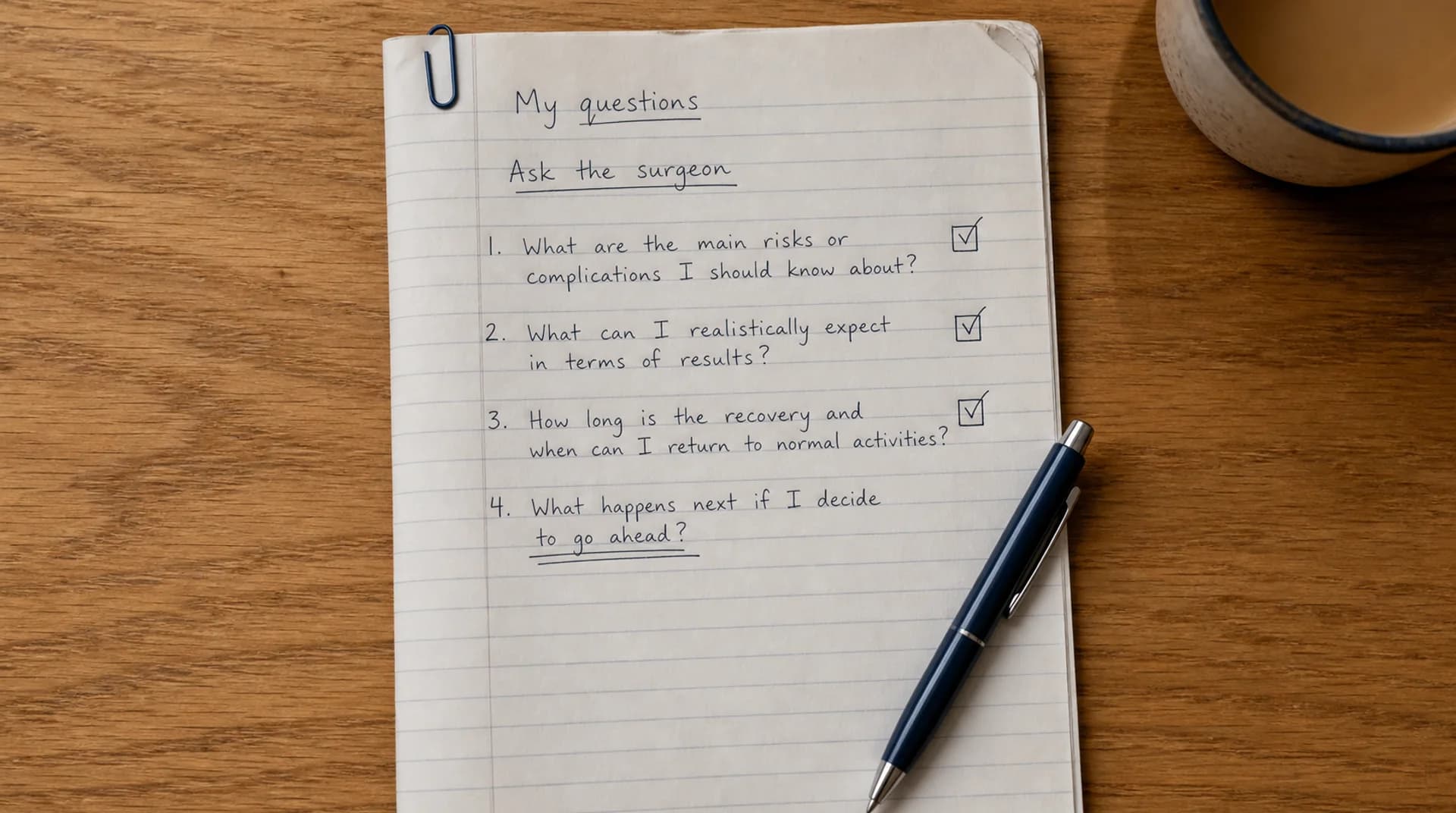
You do not need to remember every question. Take a written list and add the question that keeps returning to you. The consultation article in this cluster has a broader checklist: Rhinoplasty consultation questions.
- What do you see when you examine my nose, skin, cartilage, and breathing?
- What part of my goal is realistic, and what part should I change or leave out?
- What are the main risks and what would you do if one occurred?
- Who will explain anaesthesia, discharge, recovery, and follow-up to me?
- Who should I contact after returning to Oman, and what should I do outside clinic hours?
- What would make you advise me not to proceed?
A calm next step
Fear does not need to be defeated before you ask a question. Let it show you what needs an answer. If you want the full planning sequence, start with How to plan rhinoplasty travel from Oman. If you want to understand how Aysara coordinates the route, use the Rhinoplasty coordination page. Ask, read, pause, and decide only when the information and the decision feel clear to you.
Sources
- NHS: nose reshaping (rhinoplasty) overview (accessed 2026-09-01)
- American Society of Plastic Surgeons: rhinoplasty consultation (accessed 2026-09-01)
- American Society of Plastic Surgeons: rhinoplasty risks and safety (accessed 2026-09-01)
- American Society of Plastic Surgeons: rhinoplasty recovery (accessed 2026-09-01)
- PubMed: psychosocial factors surrounding aesthetic rhinoplasty, systematic review (accessed 2026-09-06)
- CDC Yellow Book: medical tourism, records, and follow-up (accessed 2026-09-06)
- Aysara internal provider record: Nikan international-patient translation and follow-up support
- Aysara internal surgeon record: Dr. Sara Arjang
Related articles

Rhinoplasty
How to Plan Rhinoplasty Travel from Oman: A Practical Guide
A rhinoplasty travel checklist from Oman to Iran covering case review, surgeon and hospital checks, quotes, travel documents, and follow-up.
Rhinoplasty
Rhinoplasty Consultation: Questions to Ask Before You Decide
A rhinoplasty consultation checklist covering candidacy, risks, consent, recovery, travel follow-up, and the itemized quote.

Rhinoplasty
Natural vs Defined Rhinoplasty: How to Discuss Your Goals
Natural vs defined rhinoplasty goals explained through consultation questions about proportion, breathing, limits, photographs, and expectations.
Need help planning a trip?
Start with a short message by phone, email, or WhatsApp. Do not send medical documents through the first-contact form.