
Rhinoplasty
Rhinoplasty Follow-up After Returning to Oman
How to arrange follow-up after rhinoplasty abroad, keep surgeon, hospital, and coordinator roles clear, and prepare your records for care in Oman.
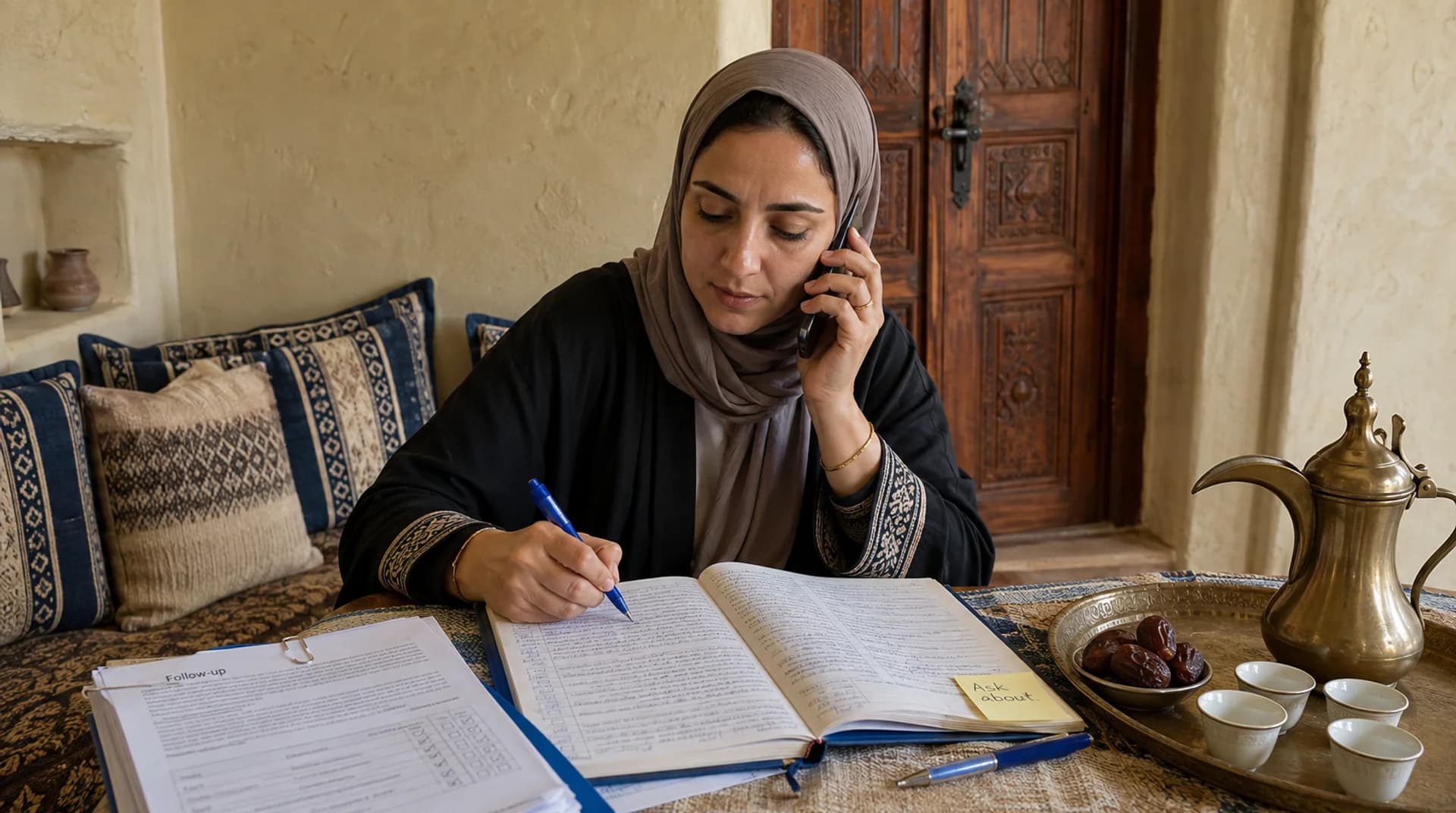
A return home can make the practical side of recovery feel finished while the clinical side is still continuing. You may still have a planned review, a dressing or splint instruction, questions about medicines or activity, or a need to show your records to a clinician in Oman. A good handover does not promise that nothing will change. It makes clear who answers each question and gives the next clinician enough information to understand what happened abroad.
Close the handover before you leave
Do not wait until you are home to discover that you do not know when the first review is, who can see your discharge record, or how a clinical concern should be escalated. Ask the treating team to explain the next step in language you understand and keep the answer in a private written record. The timing and format of follow-up depend on the operation, the examination, and the team's instructions, so a general article cannot set a safe schedule for you.
- The date or expected window for the first follow-up and who will conduct it.
- The signs, symptoms, or changes that should prompt a call to the treating team.
- The instructions you were given about medicines, dressings, washing, sleep, activity, and flying.
- The name and private contact route for the treating surgeon and the facility's clinical team.
- The records you will receive before departure and the language in which they will be supplied.
- The plan if you need local assessment in Oman, including which records that clinician should see.
The CDC advises people who receive medical care abroad to obtain copies of their medical records before returning home and to arrange follow-up care before travel. The CDC Yellow Book also advises patients not to delay medical care if they suspect a complication during travel or after returning. This is a continuity-of-care principle, not a prediction that a complication will happen.
Keep the roles separate
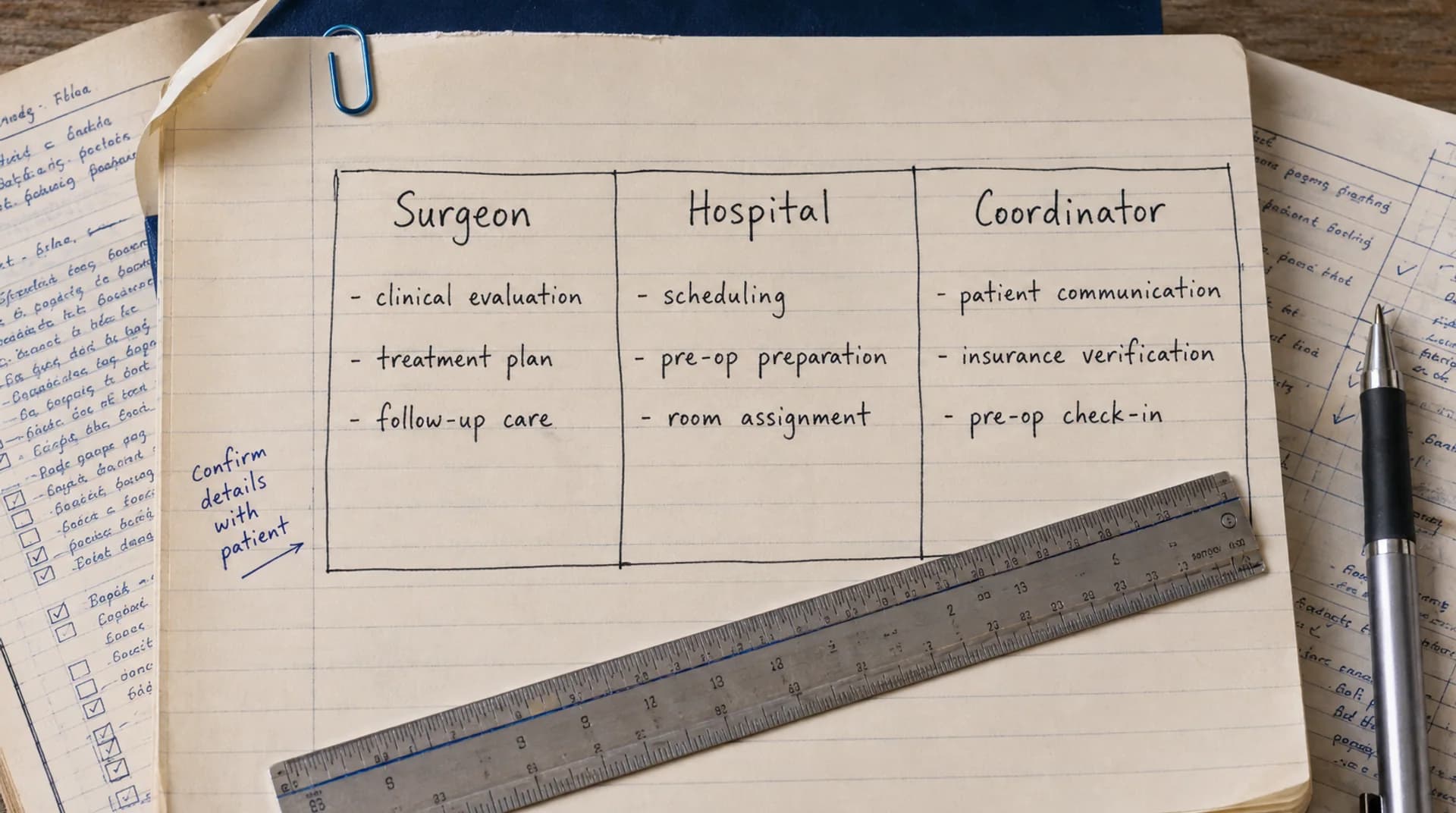
Several people may help with an international patient journey, but a single contact should not be treated as the owner of every decision. Clear roles reduce the chance that a medical question is left in a travel chat or that a scheduling answer is mistaken for clinical advice.
- The treating surgeon or clinical team answers questions about your examination, operation, recovery, medicines, activity, warning signs, and clinical follow-up.
- Nikan explains the facility's discharge and clinical aftercare process and supports the care it provides with the treating doctor.
- Aysara helps with non-clinical coordination such as scheduling, agreed translation, travel communication, and document flow.
- A healthcare professional in Oman assesses you locally if you are unwell or need in-person care. Tell that professional that you recently received treatment abroad and show the records you were given.
Aysara can help pass an agreed message or arrange a non-clinical appointment, but it cannot interpret a symptom, change a prescription, tell you that healing is normal, or decide that you are fit to fly. Keep a clinical question in the private route agreed with the treating team. Do not put medical details in a public comment, a general marketing form, or a group chat.
What to keep in your Oman follow-up file
A local clinician can make a better-informed assessment when the overseas care is documented. Keep the files secure and share them only with people involved in your care. If a record is not in a language your local clinician can use, ask the relevant care team about an appropriate translation. Do not edit a medical document yourself or rely on a memory of what happened during a busy discharge.
- The operative or procedure report, if supplied.
- The discharge summary and the instructions you were given.
- The medicines you received or were prescribed, with the original labels and the written directions.
- Relevant test results, photographs, imaging, allergies, and health-history information requested by the team.
- The treating surgeon's name, the facility contact, and the agreed follow-up route.
- A short timeline of the procedure, travel, reviews, and any new symptom or change.
Routine follow-up and a new concern are different
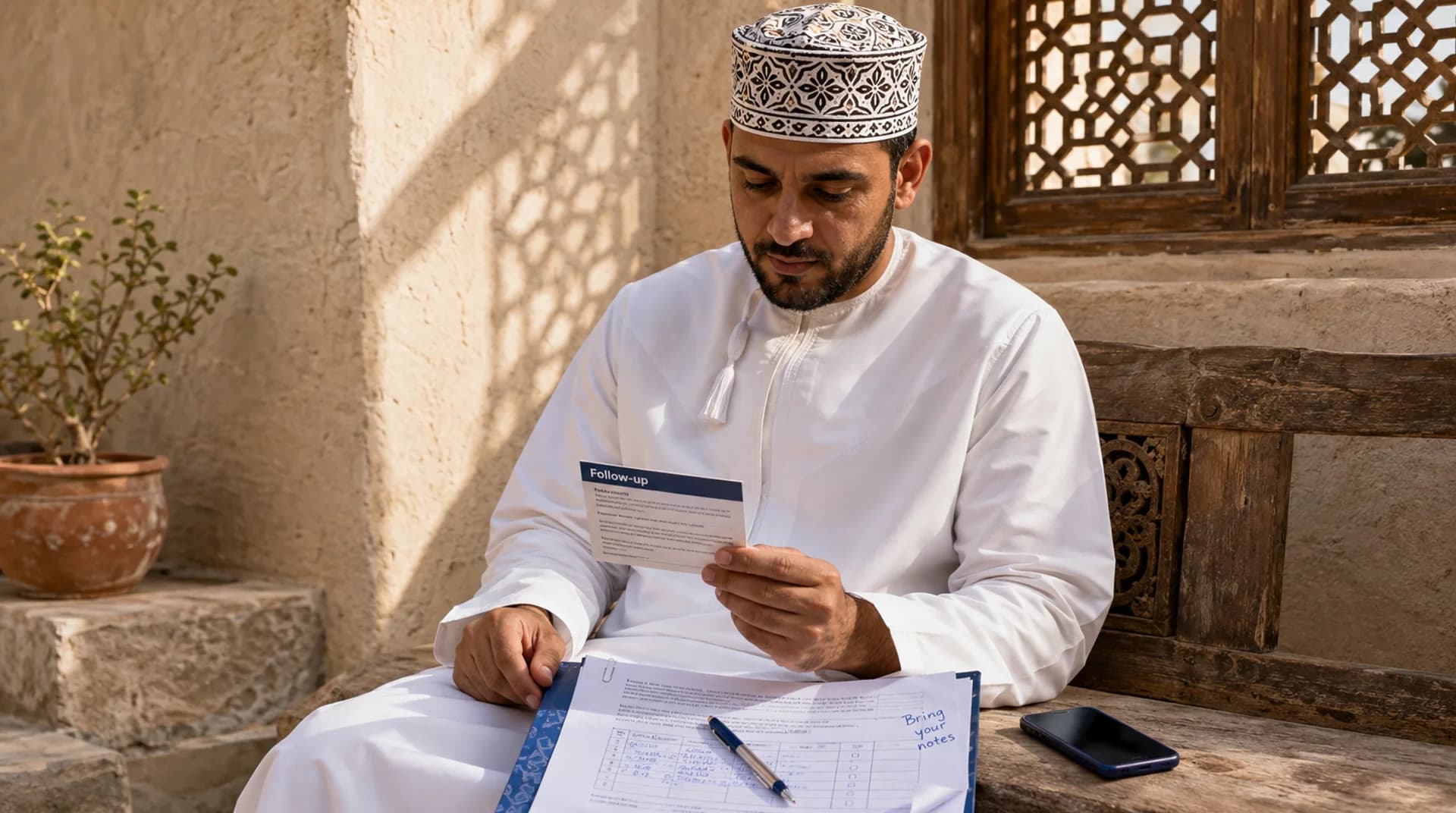
A planned follow-up is the time to review the instructions, ask questions, and let the treating team decide whether the next stage of recovery is proceeding as expected. It is not an invitation to compare your healing with someone else's photographs or to change your care based on a social-media post. If the team asks for information or a photograph through a secure route, follow that instruction and protect your privacy.
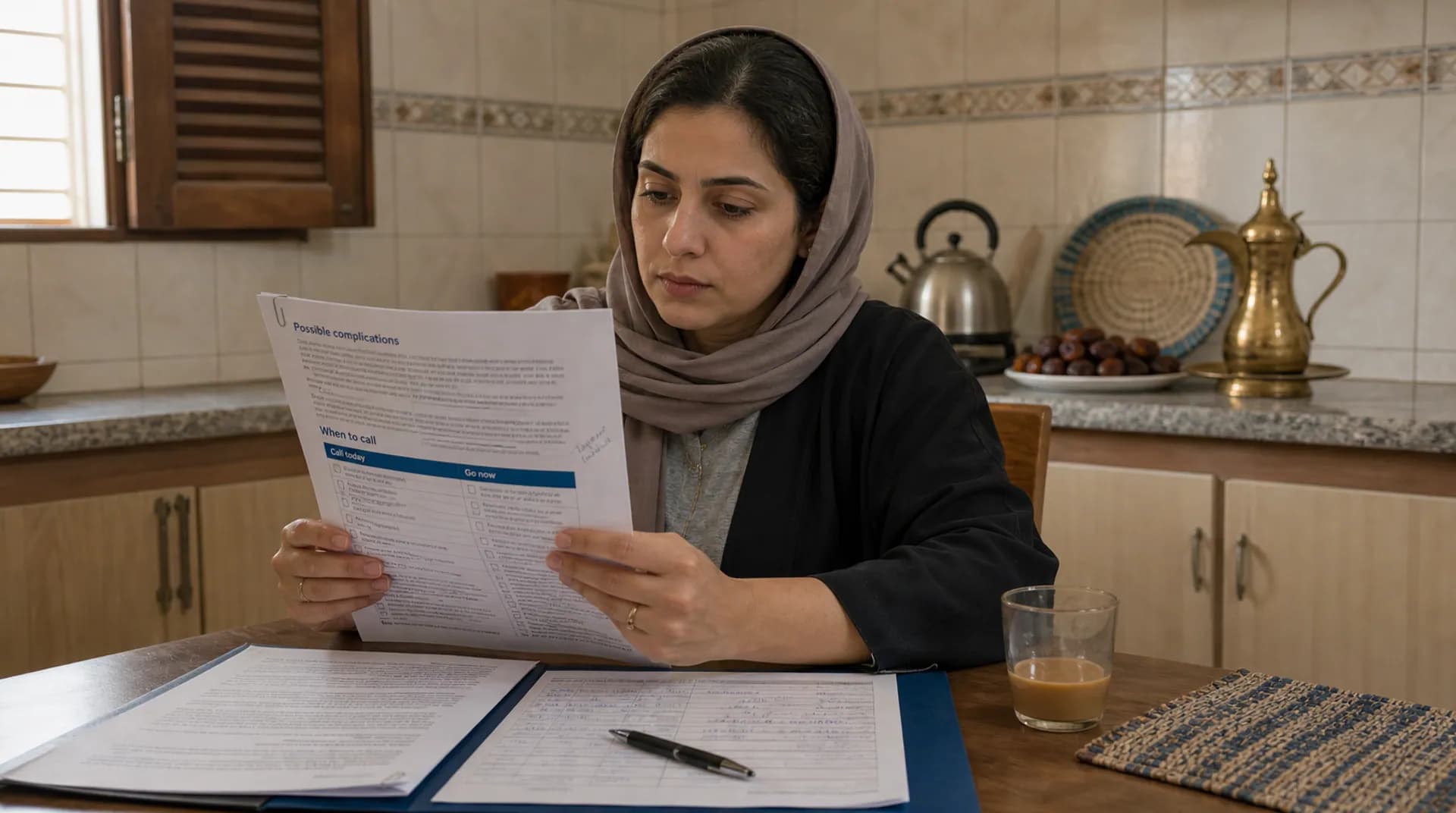
A new or worsening concern should not be held until a routine appointment simply because you have already returned home. Contact the treating clinical team through the agreed private route when the instructions tell you to do so. For a separate overview of risks and warning signs, read the rhinoplasty risks and warning signs guide. If you cannot reach that team and you feel seriously unwell, seek local medical care. Give the local clinician the procedure date, the facility, the treatment records, medicines, allergies, and your travel history.
- Seek urgent help for severe breathing difficulty, uncontrolled bleeding, fainting, chest pain, or sudden serious deterioration.
- For a non-urgent but worrying change, contact the treating clinical team promptly and keep a note of when it began.
- Do not stop or add a medicine, remove a dressing, or restart an activity because an online article says it is common.
- If you receive care in Oman, tell the clinician about the overseas operation even if the concern seems unrelated.
Ask these questions before returning to Oman
- Has the treating surgeon reviewed me and explained the next follow-up step?
- Which records will I receive, and who can help me understand them if needed?
- Who answers a clinical question after I arrive in Oman, and which private route should I use?
- Which symptoms require an immediate call or local assessment?
- What instructions apply to medicines, dressings, washing, sleep, work, exercise, and flying in my case?
- What should I do if my return date changes or I need an additional review?
- Which costs are included, and who explains the financial responsibility for extra care?
Follow-up should be part of the decision to travel
The CDC and NHS both treat aftercare and continuity as questions to settle before cosmetic surgery abroad, not as details to solve after the flight home. A plan that names the procedure but says nothing about records, reviews, complications, or additional care is incomplete. The rhinoplasty package guide explains what to ask for in writing, and the flying home guide explains why the return date must follow the treating team's decision.
Aysara can help organize the Oman-to-Iran journey on the non-clinical side. You can start with the rhinoplasty coordination page, read the wider planning guide, and review the recovery guide. The treating surgeon and Nikan remain responsible for clinical assessment and care.
Returning to Oman is a change of location, not the end of the care pathway. Leave with your records, a clear private contact route, a realistic plan for review, and enough flexibility to seek help if something changes. That preparation protects continuity without pretending that any article can make a personal medical decision for you.
Sources
- CDC: Medical Tourism (accessed 2026-09-06)
- CDC Yellow Book: Medical Tourism (accessed 2026-09-06)
- NHS: Cosmetic surgery abroad (accessed 2026-09-06)
- American Society of Plastic Surgeons: rhinoplasty risks and safety (accessed 2026-09-06)
- Aysara internal provider record: Nikan international-patient coordination
Related articles

Rhinoplasty
How to Plan Rhinoplasty Travel from Oman: A Practical Guide
A rhinoplasty travel checklist from Oman to Iran covering case review, surgeon and hospital checks, quotes, travel documents, and follow-up.

Rhinoplasty
Rhinoplasty Recovery, Week by Week
Rhinoplasty recovery timeline: what may change from the first week through the first year, and which questions belong with your treating surgeon.
Rhinoplasty
Rhinoplasty Risks, Complications, and Warning Signs
Rhinoplasty risks and complications: warning signs, emergency boundaries, informed-consent questions, and a cross-border contact plan from Oman.
Need help planning a trip?
Start with a short message by phone, email, or WhatsApp. Do not send medical documents through the first-contact form.