Rhinoplasty
Open vs Closed Rhinoplasty: Questions to Discuss with Your Surgeon
Open vs closed rhinoplasty explained: what each approach means, what the terms cannot promise, and what to ask about your assessment.
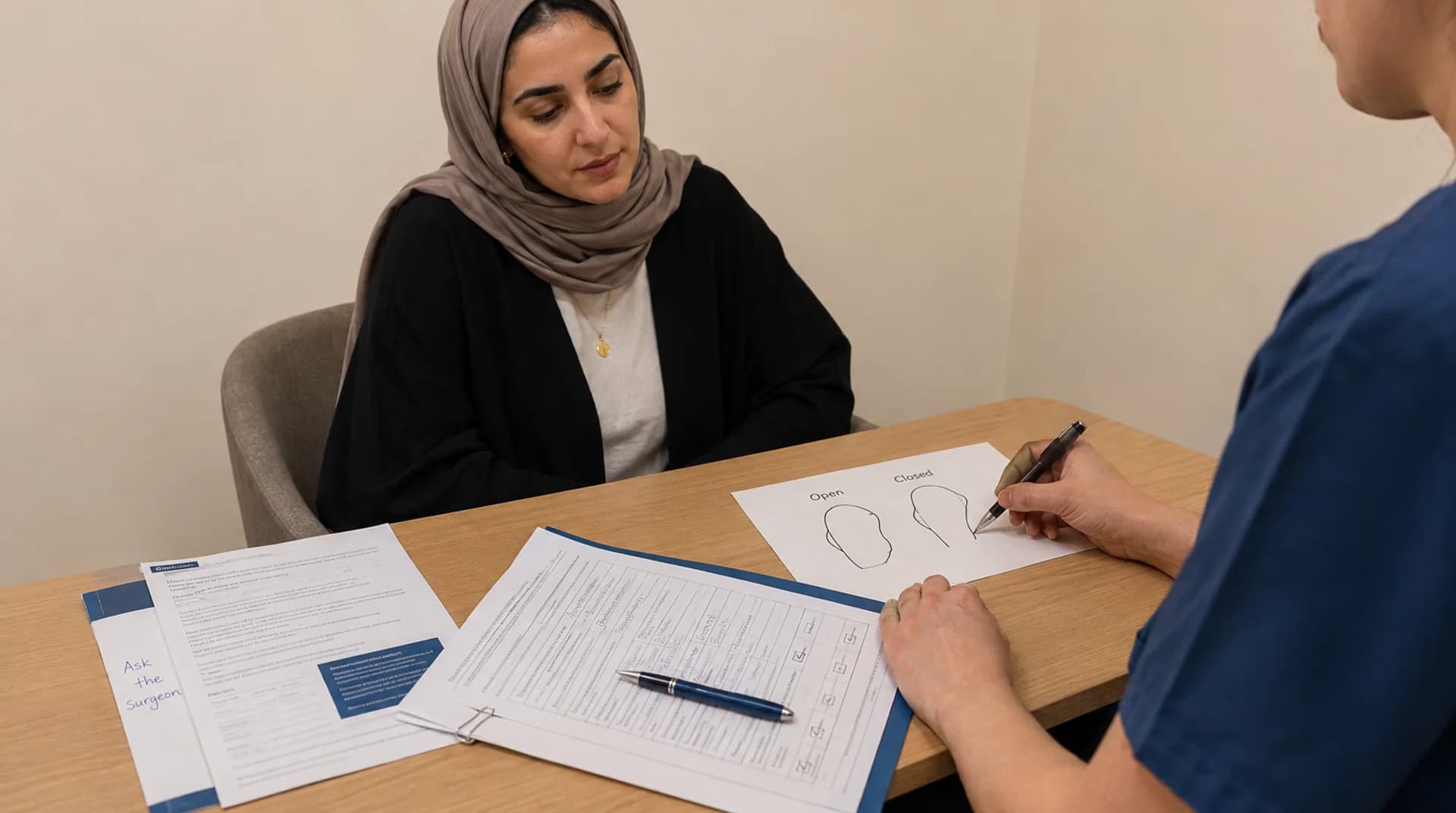
These terms are useful in a consultation because they give you a starting point for a more specific conversation. They are not a shortcut to a personal recommendation. A photograph, a search result, or another patient's operation cannot show what access your nasal structures and goals require. Ask the surgeon to explain the proposed approach in relation to your examination and the changes being considered.
What closed rhinoplasty means
In a closed rhinoplasty, the surgical incisions are made inside the nose. The surgeon works through those internal openings to reach and reshape the structures included in the plan. Because there is no external columellar incision, there is no incision in that visible strip between the nostrils. That description does not predict how much work will be done, how quickly one person will recover, or what result an individual will have.
Closed access may be discussed when the surgeon believes the planned work can be performed through internal incisions. The fact that an approach is described as closed does not mean that it is a minor procedure, that swelling will be absent, or that a patient can skip normal risk and recovery discussions. The treating team still has to explain the procedure, alternatives, limits, and follow-up for your case.
What open rhinoplasty means
In an open rhinoplasty, the surgeon uses internal incisions and adds an incision across the columella to lift the skin and see the underlying nasal framework more directly. The American Society of Plastic Surgeons describes the columella as the narrow strip of tissue that separates the nostrils. The external incision is closed at the end of the procedure and its healing is part of the discussion with the surgeon.
The additional access can be useful when the surgeon needs a more direct view or more precise control of particular structures. That does not make open access the universal choice. It also does not allow an article to predict whether a scar will be noticeable, how long swelling will last, or how your final appearance will develop. Those questions belong to the consultation and the treating team's examination.
- Closed means the incisions are inside the nose.
- Open means the surgeon adds an incision across the columella to improve access to the nasal framework.
- Both approaches require a discussion of risks, alternatives, recovery, and follow-up.
- The label does not by itself describe the full operation or promise a particular result.
Why the choice is case-specific
A surgeon may consider the structures that need attention, the complexity of the proposed changes, whether you have had previous nasal surgery, the amount of access needed, and the surgeon's experience and preference. The diagnosis and the patient's goals matter together. A person asking about a small change to the bridge is not asking the same question as someone with a previous operation, a structural concern, or a plan involving the tip and supporting cartilage.
Open and closed are also not substitutes for the words cosmetic, functional, primary, or revision. Cosmetic and functional goals are explained in the difference between cosmetic and functional rhinoplasty. A first operation and revision surgery have different planning questions, which are covered in primary versus revision rhinoplasty. Do not assume that the access label answers those separate questions.
What the terms cannot tell you
- They cannot tell you whether you are a suitable candidate for rhinoplasty.
- They cannot tell you whether your breathing concern comes from the septum, the nasal valves, the turbinates, allergies, another condition, or more than one factor.
- They cannot tell you whether the procedure will improve your breathing or appearance.
- They cannot tell you that a visible scar will be absent or that recovery will be painless.
- They cannot tell you the final cost, the length of your stay, or whether a specific plan is included in a provider package.
- They cannot replace informed consent, a physical examination, or a discussion of alternatives.
Be cautious when a clinic presents one approach as a universal solution or uses the word closed as a guarantee of an easier recovery. The American Society of Plastic Surgeons' practice parameter describes the choice as depending on the patient's diagnosis, the advantages and disadvantages of each technique, and the surgeon's preference. That is a better question framework than ranking the two words in isolation.
The useful comparison is therefore not which label sounds better. Ask what access the proposed plan requires, how the surgeon will explain the trade-offs, where follow-up will happen, and which parts of the decision can change after examination. A clear explanation should leave room for your questions rather than pressure you toward a preselected technique.

Questions to take into the consultation
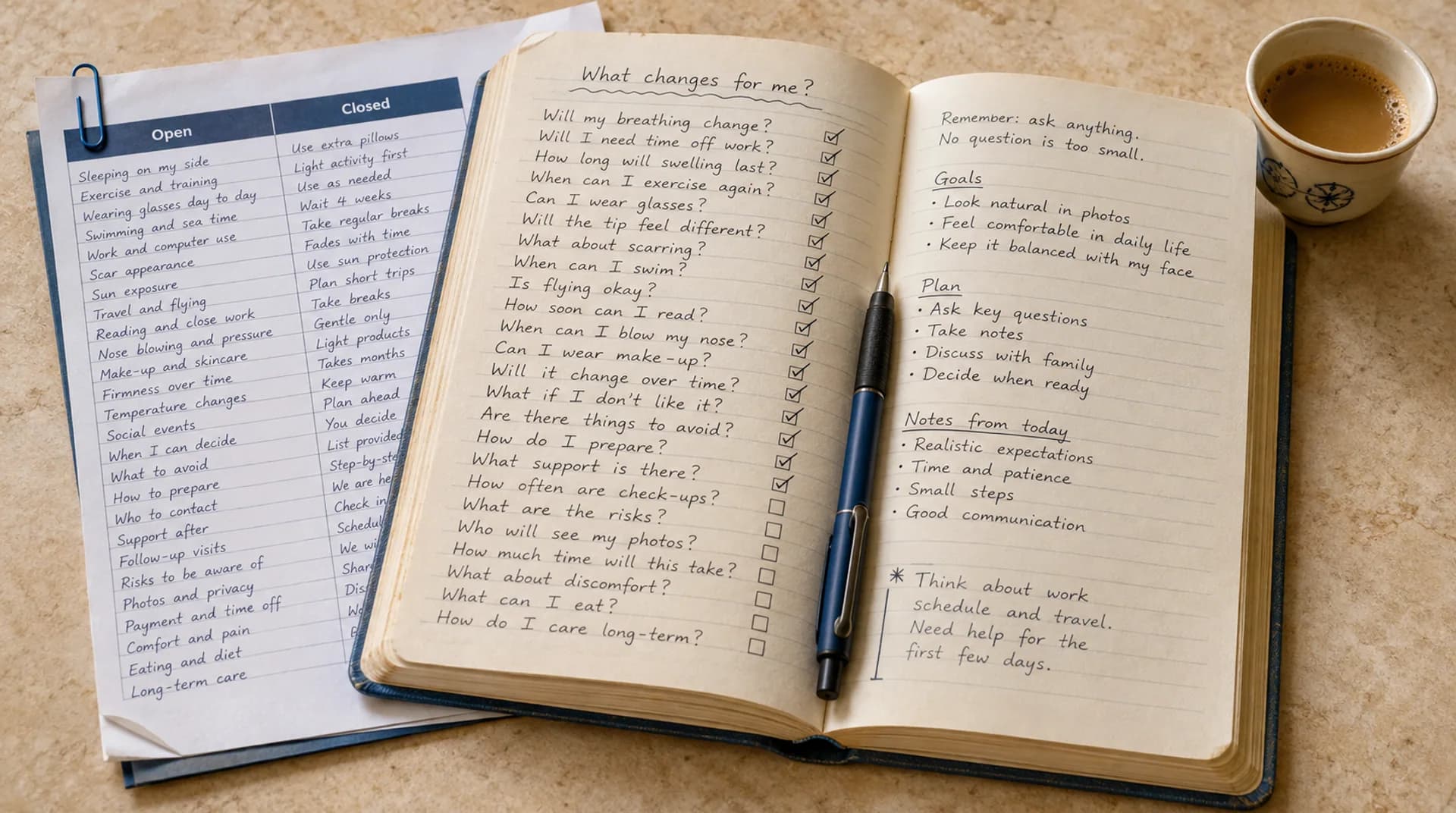
The goal of the consultation is not to arrive with a technique selected. It is to understand the reasoning behind the proposed plan well enough to consent freely or decide that you need more time. Write the answers down and ask for important instructions in a form you can review later.
- Which approach are you recommending for me, and what finding makes it appropriate?
- What structures will be assessed or changed, and what is outside the scope of the operation?
- How does previous surgery, injury, skin, cartilage, or breathing history affect the plan?
- What are the alternatives, including not having surgery or staging a decision?
- Where would any incision be, and what should I understand about its healing?
- What risks, limitations, recovery restrictions, and warning signs should I plan for?
- What follow-up will happen before I return to Oman and after I return?
- Which parts of the plan are clinical decisions and which travel arrangements must remain flexible?
Open or closed is not a result style
The approach describes access, not a promise that the nose will look natural, defined, smaller, straighter, or like a reference photograph. Those are separate conversations about goals, anatomy, limitations, and what the surgeon believes is realistic. The article on natural or defined rhinoplasty goals can help you prepare vocabulary, but it cannot choose a result for you.
If you are travelling from Oman, include approach, aftercare, records, and changes in the written plan. The rhinoplasty travel planning guide explains the wider journey, while the rhinoplasty coordination page is the route for non-clinical questions about an Aysara-coordinated journey. The treating surgeon makes the clinical decision after assessment.
A useful consultation leaves you with more than a label. You should understand what the surgeon is proposing, why that approach fits the assessment, what it cannot guarantee, and what follow-up will involve. If those answers are not clear, pause and ask again before making a medical or travel commitment.
Sources
- American Society of Plastic Surgeons: Rhinoplasty procedure steps (accessed 2026-09-06)
- American Society of Plastic Surgeons: Frequently asked rhinoplasty questions (accessed 2026-09-06)
- American Society of Plastic Surgeons: Nasal surgery practice parameter (accessed 2026-09-06)
- Aysara content plan: rhinoplasty intent map and clinical boundaries
Related articles

Rhinoplasty
How to Plan Rhinoplasty Travel from Oman: A Practical Guide
A rhinoplasty travel checklist from Oman to Iran covering case review, surgeon and hospital checks, quotes, travel documents, and follow-up.

Rhinoplasty
Cosmetic vs Functional Rhinoplasty: What Is the Difference?
A clear guide to cosmetic vs functional rhinoplasty and rhinoplasty vs septoplasty, with questions to clarify scope before travel or a quote.

Rhinoplasty
Rhinoplasty Consultation: Questions to Ask Before You Decide
A rhinoplasty consultation checklist covering candidacy, risks, consent, recovery, travel follow-up, and the itemized quote.
Need help planning a trip?
Start with a short message by phone, email, or WhatsApp. Do not send medical documents through the first-contact form.