
Rhinoplasty
Rhinoplasty Goals, Photos, and Realistic Expectations
How to describe rhinoplasty goals, use consultation photos responsibly, protect your privacy, and set realistic expectations before deciding.
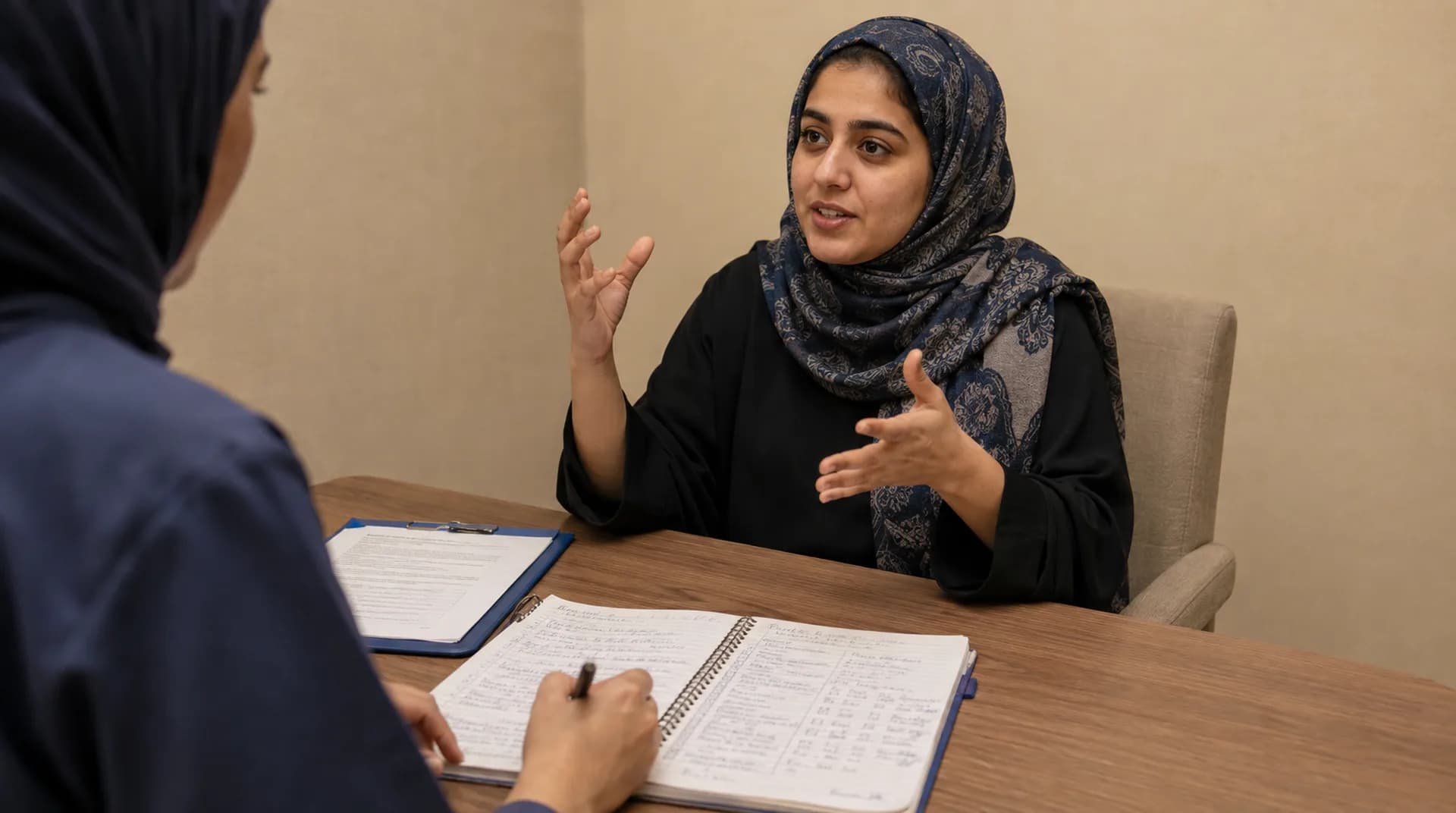
A useful goal is specific enough to discuss and flexible enough to respect your anatomy. Instead of asking for a face that belongs to someone else, describe the feature you want to understand or the change you hope to explore. You might want to discuss a bridge that appears prominent in profile, a tip that feels broad from the front, an asymmetry, or a concern about breathing. You might also want to keep features that make your face recognisable. The point is not to choose a technique from a photograph. The point is to help the surgeon understand what you see and what you value.
Start with a feature, not a fantasy
Words such as perfect, tiny, elegant, or natural mean different things to different people. They can open a conversation, but they are not a plan. Turn them into questions that can be answered during an examination. Ask yourself which view bothers you, what you would like to change, what you would not want to lose, and whether the concern is about appearance, breathing, or both. Keep the answer in your own language. You do not need to know the surgical name for a shape before a consultation.
- What feature do I want to discuss, and in which view do I notice it most?
- What would I prefer to keep because it belongs to my face or family resemblance?
- Is my concern cosmetic, functional, or not yet clear to me?
- What change would feel meaningful without requiring an entirely different face?
- What am I afraid the result might change?
- Why am I considering this now, and would I still want the conversation without pressure from another person or an online trend?
Write your goals in your own words
Before a consultation, write a short note that separates your priorities from your assumptions. One section can describe what you see. Another can describe what you hope will feel different. A third can list what you want to protect. Add any breathing concern, previous nasal injury, prior surgery, allergies, medicines, smoking or vaping, and relevant health history for the clinical team. This is not a diagnosis and it does not replace an examination. It gives you a starting point when the conversation becomes detailed.
Bring questions about alternatives as well as the proposed operation. The ASPS consultation guidance recommends discussing your goals, health history, medicines, prior surgery, examination, options, likely outcomes, and risks. A responsible consultation should also leave room for the surgeon to say that a requested change is limited, unsuitable, or not worth the trade-off. That answer is part of informed decision-making, not a failure of the consultation.
Reference photos are discussion material, not a contract
A reference image shows one person's anatomy, skin, cartilage, facial proportions, lighting, expression, camera angle, and healing history. It cannot show which changes were possible for that person or whether the image has been edited. Even a genuine before and after from a surgeon's own work can illustrate a range of outcomes, not a guaranteed template for you. The American Society of Plastic Surgeons advises patients to look for examples with characteristics similar to their own when forming general expectations, while also recognising that anatomy and healing affect the result.
Social-media images are particularly easy to misread. Filters, lens distortion, posing, makeup, lighting, swelling, and the time between photographs can change what you think you are seeing. A three-dimensional simulation may help a clinician explain a concept, but it should not be treated as a promise. Ask what a photograph is meant to demonstrate and what it cannot tell you. Your surgeon's examination and explanation carry more weight than a collection of saved images.
- Choose a small number of images and mark the specific feature you want to discuss.
- Ask whether the images show the front, profile, and base views consistently.
- Ask whether the examples are the surgeon's own cases and whether the lighting and timing are explained.
- Do not ask for an exact copy of another person's nose or face.
- Treat any predicted image as a discussion aid, not a final-result guarantee.
Use photographs carefully and protect your privacy
A clinician may ask for photographs or may take them during an assessment. Before you send anything, confirm who receives the images, who can access them, how they are stored, how long they are kept, whether they may be used for teaching or publication, and how you can withdraw permission. Ask whether the route is private and appropriate for clinical material. Aysara can explain a non-clinical communication route and help pass an agreed logistical message, but the treating team owns the clinical assessment and any clinical image request.
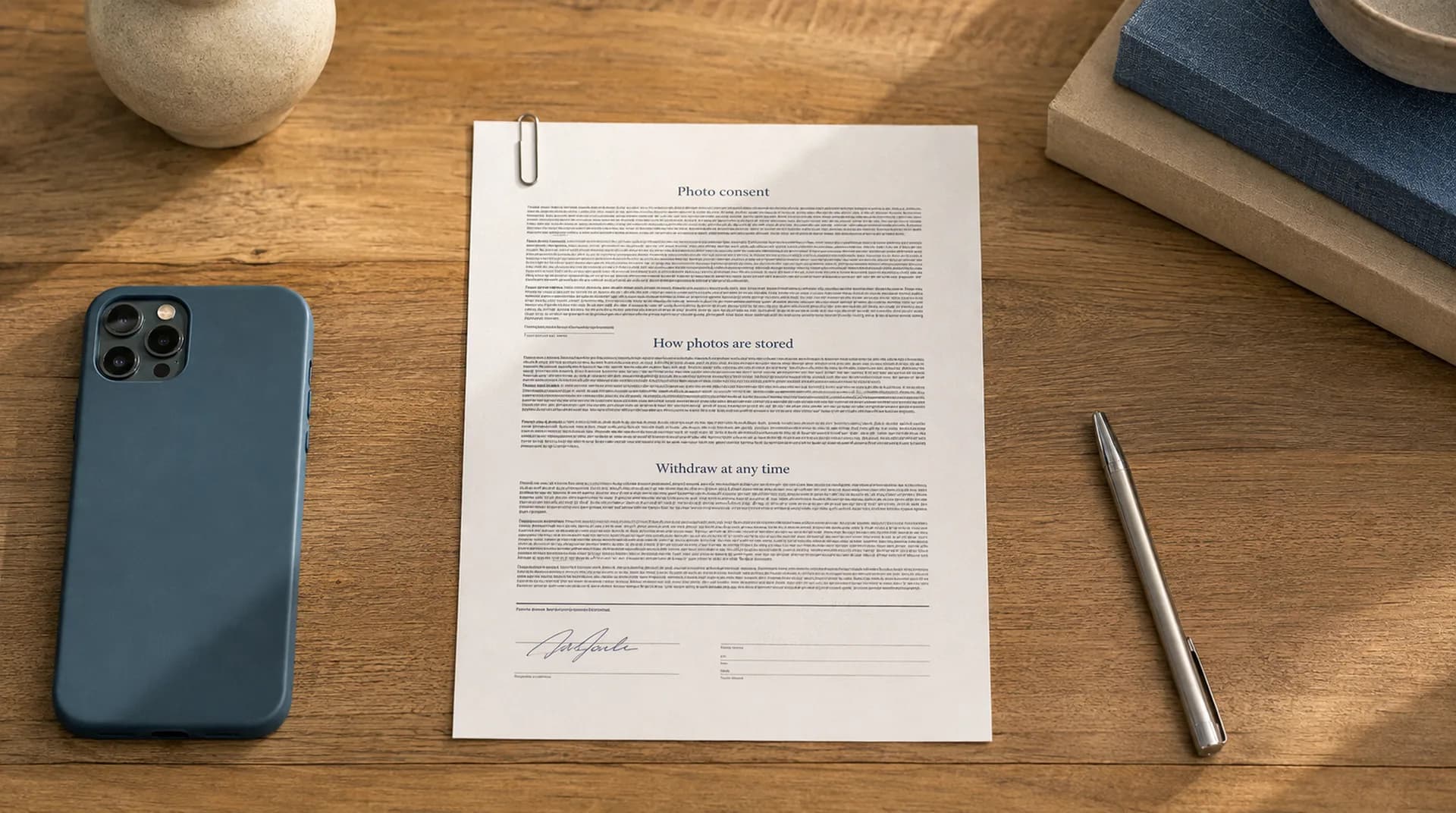
Do not post identifiable photographs or medical details in a public comment, a social-media message to an unknown account, or a general enquiry form that was not designed for clinical material. The CDC notes that overseas facilities may not use the same privacy and security policies you expect at home. That does not mean you should avoid care. It means you should ask direct questions before sharing information and keep a private record of the consent you gave.
- What is the secure route for sending a consultation photograph?
- Who will see it, and is access limited to the clinical team?
- Will it be stored in a medical record or a separate image system?
- How long will it be retained, and how can I request deletion where applicable?
- Can I refuse use for teaching, marketing, or publication without affecting my care?
- What should I do if I sent an image to the wrong account?

A realistic goal can include keeping what makes your face yours
Rhinoplasty planning is not a contest to remove every family or ethnic feature. A face has relationships between the nose, chin, cheeks, eyes, skin, and expression. The surgeon may discuss proportion, but that does not mean every difference needs correction. Tell the clinician which features you want to preserve and how you want the result to fit your face. A younger face and an older face may need different conversations about skin, health, healing, and expectations. A family resemblance is not a problem to solve.
It is also reasonable to be unsure. You can ask for information without committing to surgery. You can ask what would happen if you changed nothing, what alternatives exist, and which requested change would be limited by your anatomy. If the only acceptable outcome is an exact image or a promise of perfection, pause before booking. A surgeon cannot responsibly guarantee that standard.
Time is part of the expectation
A photograph taken soon after surgery is not a final assessment. Swelling can change the appearance during recovery, and the ASPS notes that refinement of the nasal contour can continue for many months, sometimes up to a year. The treating surgeon should explain the expected course for your operation and the reviews you need. For the separate question of swelling and final-result timing, read the rhinoplasty swelling and final-result guide. Do not compare your week, month, or camera angle with someone else's timeline and use it to change your care.
Expectation setting also includes limits. Healing is individual. Perfect symmetry is not a realistic promise for a living face, and an aesthetic change cannot guarantee a particular emotional or social outcome. If you are hoping surgery will solve a relationship, job, confidence, or identity problem, discuss that pressure honestly with a qualified clinician and give yourself time. A decision made under a demand for immediate life change deserves a pause.
Questions to take to the surgeon
- Which of my goals are realistic after you examine me, and which are limited by my anatomy?
- What do you need to know about my breathing, allergies, medicines, previous injury, or prior surgery?
- What alternatives, including no surgery or a staged decision, should I consider?
- Which views and examples will help us discuss the plan without treating a reference photo as a promise?
- What changes should I expect during swelling and later refinement?
- What risks or trade-offs matter most for the change I am asking about?
- Who takes and stores any clinical photographs, and what is the consent process?
- What follow-up will I need in Iran and after I return to Oman?
Plan the conversation before you plan the journey
If you are considering rhinoplasty in Iran, start with the rhinoplasty coordination page, then read the Oman travel planning guide and the consultation questions guide. The natural or defined results guide can help you find language for a consultation, but it cannot tell you which result will suit you. The surgeon and Nikan assess and provide care. Aysara coordinates non-clinical logistics, communication, and the agreed patient journey.
Good expectations are not low expectations. They are specific, informed, private, and open to a clinical answer that may include limits or no. Bring your own words, a short list of questions, and a willingness to discuss the whole face rather than chase one image. That gives the consultation a better chance of becoming a clear decision instead of a comparison with someone else's photograph.
Sources
- ASPS: Rhinoplasty consultation (accessed 2026-09-06)
- ASPS: How to set realistic expectations from before and after photos (accessed 2026-09-06)
- ASPS: Six things to know before booking a rhinoplasty (accessed 2026-09-06)
- ASPS: Rhinoplasty recovery (accessed 2026-09-06)
- CDC Yellow Book: Medical tourism (accessed 2026-09-06)
- Aysara internal content permission and provider-scope records
Related articles
Rhinoplasty
Rhinoplasty Consultation: Questions to Ask Before You Decide
A rhinoplasty consultation checklist covering candidacy, risks, consent, recovery, travel follow-up, and the itemized quote.

Rhinoplasty
Natural vs Defined Rhinoplasty: How to Discuss Your Goals
Natural vs defined rhinoplasty goals explained through consultation questions about proportion, breathing, limits, photographs, and expectations.

Rhinoplasty
Am I a Candidate for Rhinoplasty? What a Surgeon Assesses
What a rhinoplasty candidacy assessment covers, what a surgeon checks, and why suitability requires history, examination, and any needed tests.
Need help planning a trip?
Start with a short message by phone, email, or WhatsApp. Do not send medical documents through the first-contact form.